Comprehensive Plant List
AquaSai Bagmati Restoration Initiative: 48 Kathmandu-Suitable Plants with Multi-Functional Medicinal and Phytoremediation Benefits for Sustainable River Ecosystem Restoration
Scientific catalog compiled by AquaSai | Botanical art by Synthography Artist Enea Le Fons
I. Ayurvedic Medicinal Plants with Phytoremediation Properties
Category Overview: These plants have been used in Ayurvedic medicine for centuries and also possess significant phytoremediation capabilities. Selected by AquaSai for the Bagmati River Restoration Initiative, they combine cultural significance, medicinal value, and water purification functions.

1. Acorus calamus (Sweet Flag / Bojho)
Medicinal Uses: Digestive disorders, respiratory ailments, neurological conditions, memory enhancement.
Phytoremediation: Heavy metal uptake (Cadmium, Lead, Copper), wastewater treatment, constructed wetland plant.
Nutrient Uptake: High nitrogen and phosphorus absorption from eutrophic water.
Growing Conditions: Wetlands, marshy areas, 300-2000m elevation, tolerates waterlogged conditions.
Synergy: Creates habitat for beneficial microorganisms, rhizome filtration system.
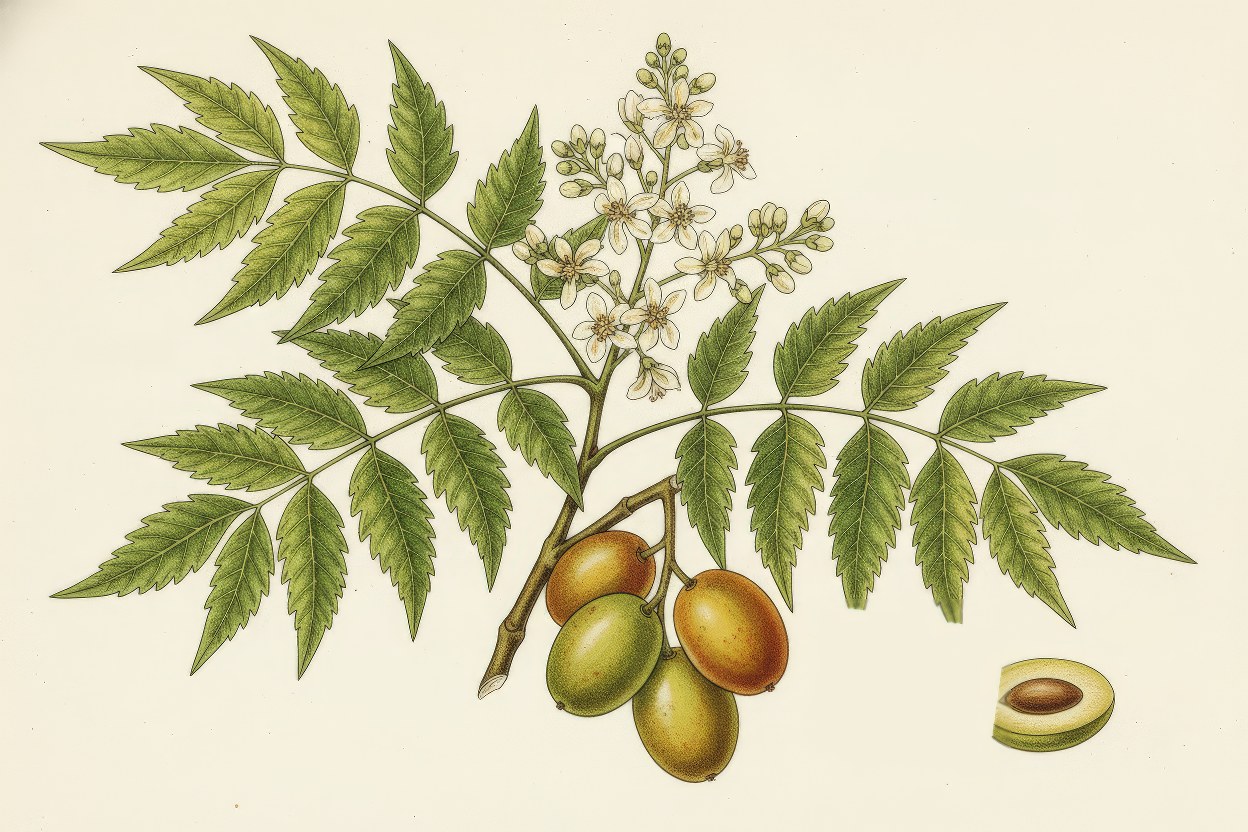
2. Azadirachta indica (Neem)
Medicinal Uses: Anti-bacterial, anti-fungal, fever reduction, skin diseases, dental health, immune support.
Phytoremediation: Soil stabilization, heavy metal accumulation, air purification.
Nutrient Uptake: Excellent nitrogen fixer, improves soil fertility.
Growing Conditions: 300-1500m, drought resistant, adaptable to poor soils.
Synergy: Natural pest control through azadirachtin compounds, improves soil fertility for companion plants.
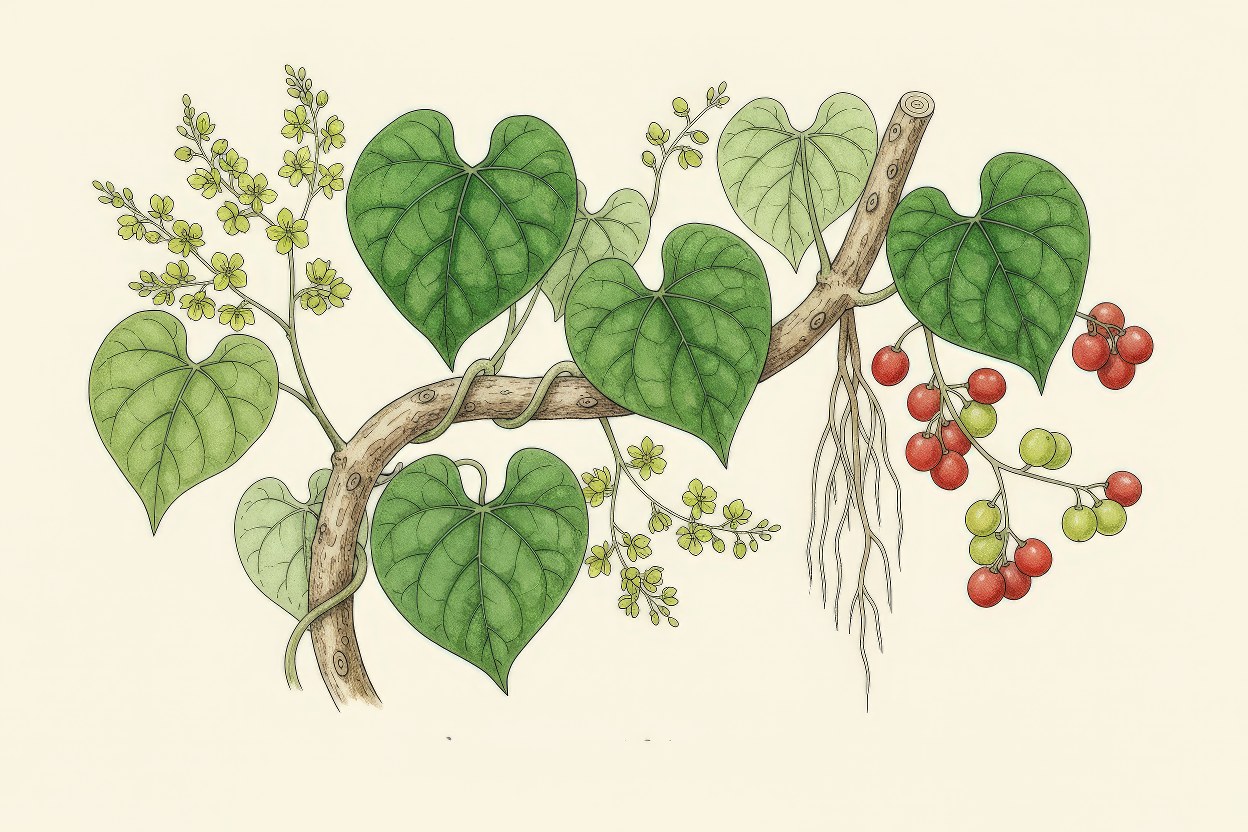
3. Tinospora cordifolia (Guduchi)
Medicinal Uses: Diabetes management, immune support, fever, anti-inflammatory, hepatoprotective.
Phytoremediation: Organic pollutant degradation, tolerates contaminated soils.
Nutrient Uptake: Moderate nitrogen and micronutrients.
Growing Conditions: Climbing vine, 300-1800m, grows on host trees.
Synergy: Provides vertical structure for ecosystem diversity, supports tree companions.
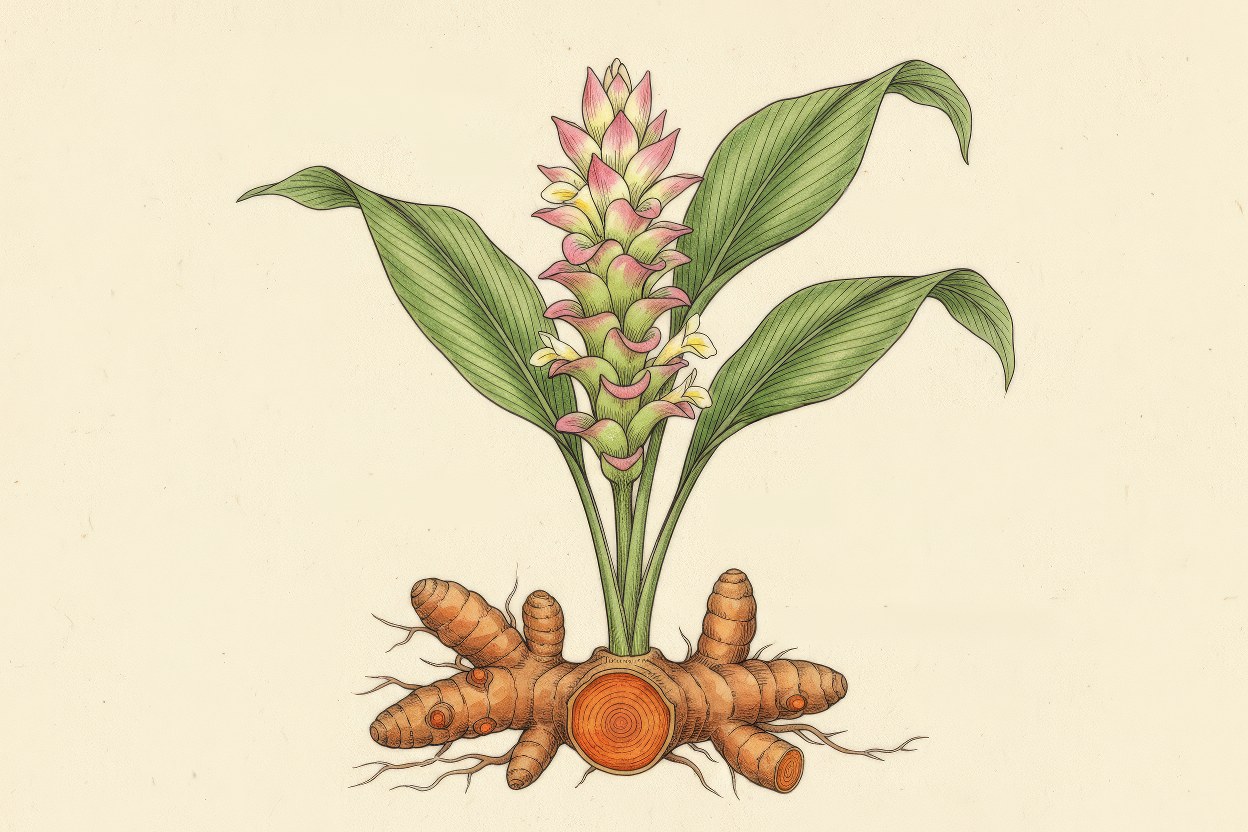
4. Curcuma longa (Turmeric / Besar)
Medicinal Uses: Anti-inflammatory (curcumin), wound healing, digestive health, antioxidant.
Phytoremediation: Heavy metal chelation (Copper, Zinc), soil conditioning.
Nutrient Uptake: Phosphorus accumulator, improves soil structure.
Growing Conditions: Moist soil, 300-1500m, shade-tolerant.
Synergy: Rhizosphere enhancement, antimicrobial soil properties.

5. Terminalia chebula (Haritaki / Harro)
Medicinal Uses: Digestive tonic, antioxidant, respiratory health, wound healing, "king of medicines."
Phytoremediation: Soil erosion control, slope stabilization.
Nutrient Uptake: Deep root system for nutrient cycling, drought-tolerant.
Growing Conditions: 200-1500m, deciduous tree.
Synergy: Provides shade canopy, wildlife habitat, valuable fruit harvest.

6. Bergenia ciliata (Pashanbhed)
Medicinal Uses: Kidney stones dissolution (pashanbhed = stone-breaker), urinary tract issues.
Phytoremediation: Rock weathering, soil formation from bare rock, pioneer species.
Nutrient Uptake: Calcium and mineral accumulation from substrates.
Growing Conditions: Rocky areas, 1800-3600m, alpine meadows.
Synergy: Pioneer species for degraded landscapes, creates soil for succession.

7. Andrographis paniculata (Kalmegh)
Medicinal Uses: Fever reduction, liver protection, immune support, anti-viral properties.
Phytoremediation: Pesticide degradation, organic pollutant breakdown.
Nutrient Uptake: Fast-growing, high biomass production.
Growing Conditions: 300-1200m, moist areas, annual herb.
Synergy: Ground cover prevents soil erosion, quick establishment.

8. Ocimum sanctum (Holy Basil / Tulsi)
Medicinal Uses: Respiratory health, stress relief, antimicrobial, adaptogen, sacred plant.
Phytoremediation: Air purification, heavy metal uptake (especially from contaminated soils).
Nutrient Uptake: Phosphorus and potassium accumulator.
Growing Conditions: 300-1800m, full sun, drought-tolerant.
Synergy: Attracts pollinators, aromatic oils deter pests, cultural/spiritual significance.
II. Tibetan Medicinal Plants for High-Altitude Areas
Category Overview: AquaSai recognizes the importance of high-altitude plant species in Himalayan ecosystems. These Tibetan medicinal plants are adapted to harsh alpine conditions and provide both healing properties and critical ecosystem services for highland water sources feeding the Bagmati River system.
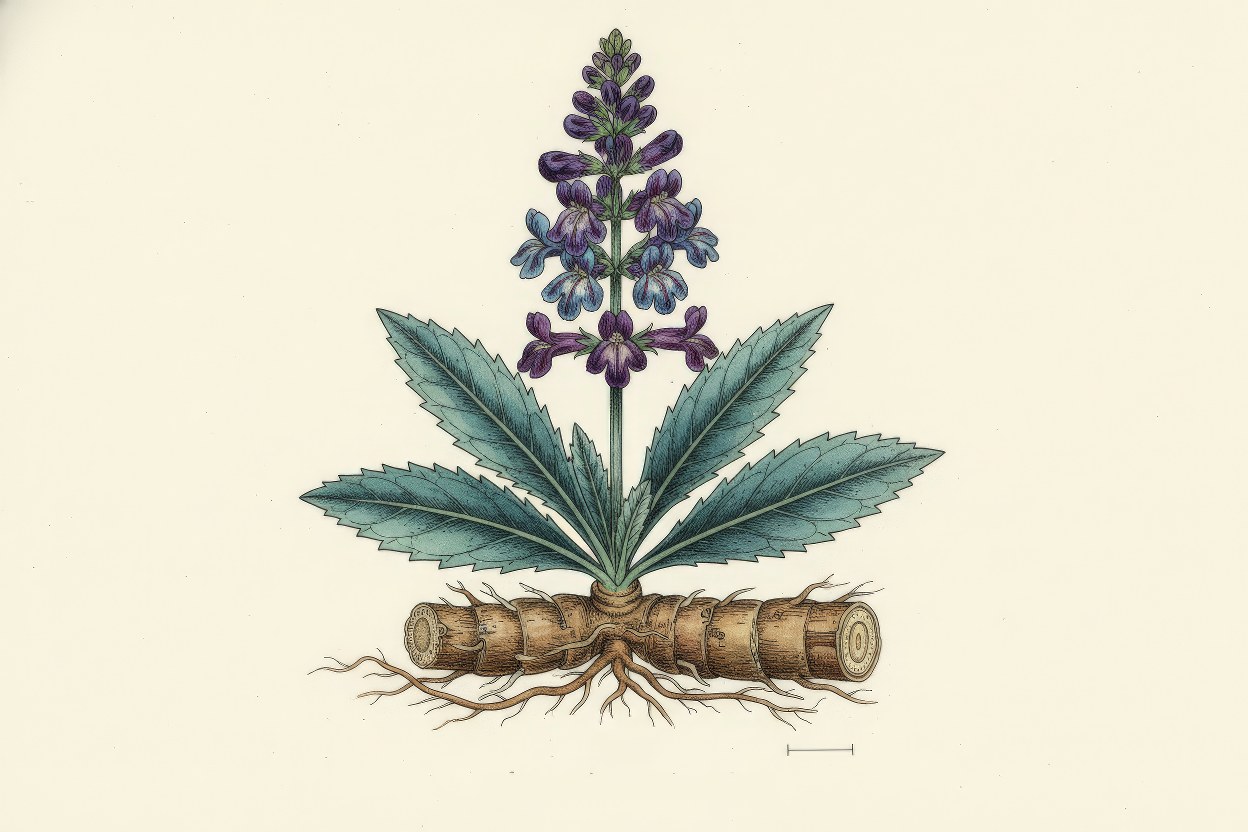
9. Neopicrorhiza scrophulariiflora (Kutki)
Medicinal Uses: Liver disorders, immune modulation, hepatoprotective, fever.
Phytoremediation: Alpine wetland stabilization, high-altitude water source protection.
Nutrient Uptake: Cold-adapted nutrient cycling mechanisms.
Growing Conditions: 3000-5000m, alpine meadows, endangered species requiring conservation.
Synergy: Indicator of ecosystem health, endemic Himalayan species.
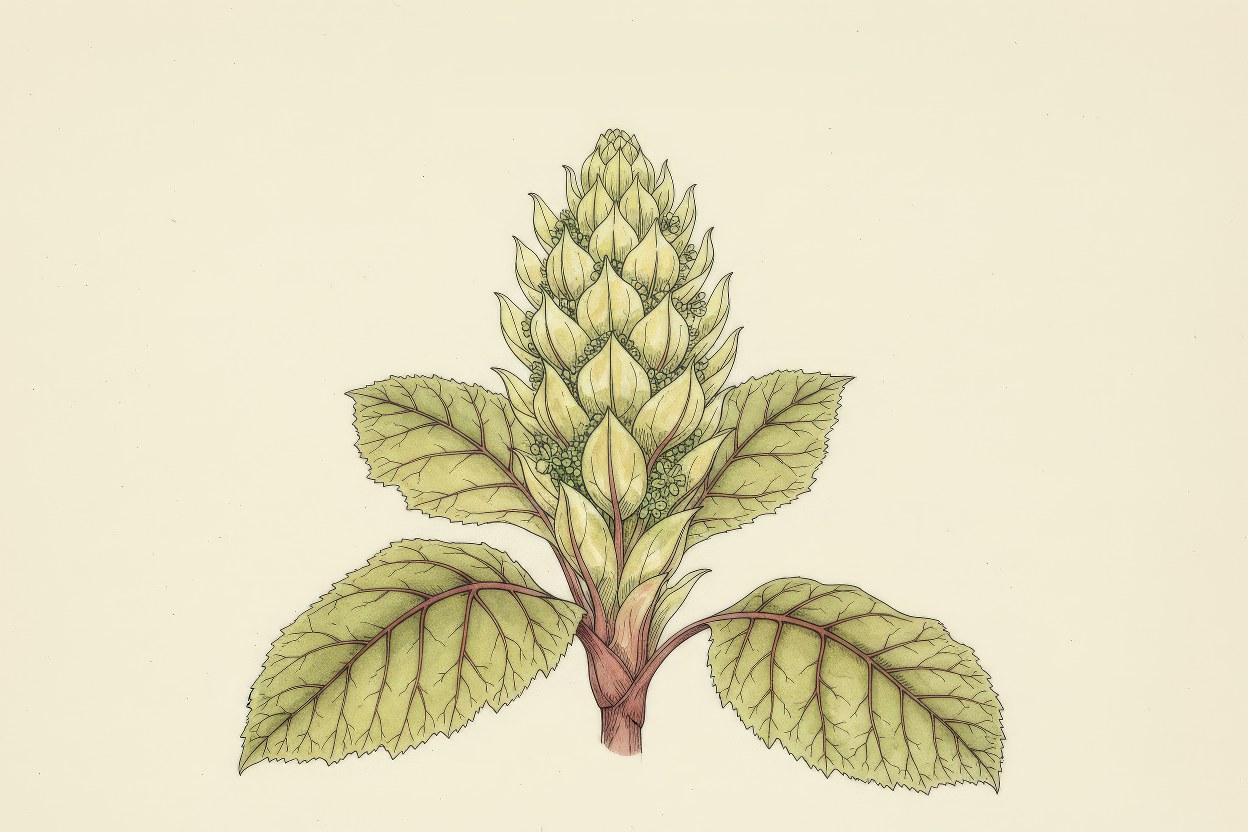
10. Rheum nobile (Noble Rhubarb)
Medicinal Uses: Digestive issues, anti-inflammatory, purgative, Tibetan medicine.
Phytoremediation: Soil enrichment through large biomass decomposition.
Nutrient Uptake: Excellent nitrogen and organic matter accumulation.
Growing Conditions: 3500-5500m, spectacular transparent-bracted inflorescence.
Synergy: Creates microclimate for other species, iconic Himalayan flora.

11. Fritillaria cirrhosa (Himalayan Fritillary)
Medicinal Uses: Respiratory conditions, cough suppressant, expectorant, valuable TCM ingredient.
Phytoremediation: Alpine soil stabilization, seasonal ground cover.
Nutrient Uptake: Specialized bulb storage system.
Growing Conditions: 3000-4500m, requires conservation due to overharvesting.
Synergy: Seasonal growth cycle complements other species, spring bloomer.
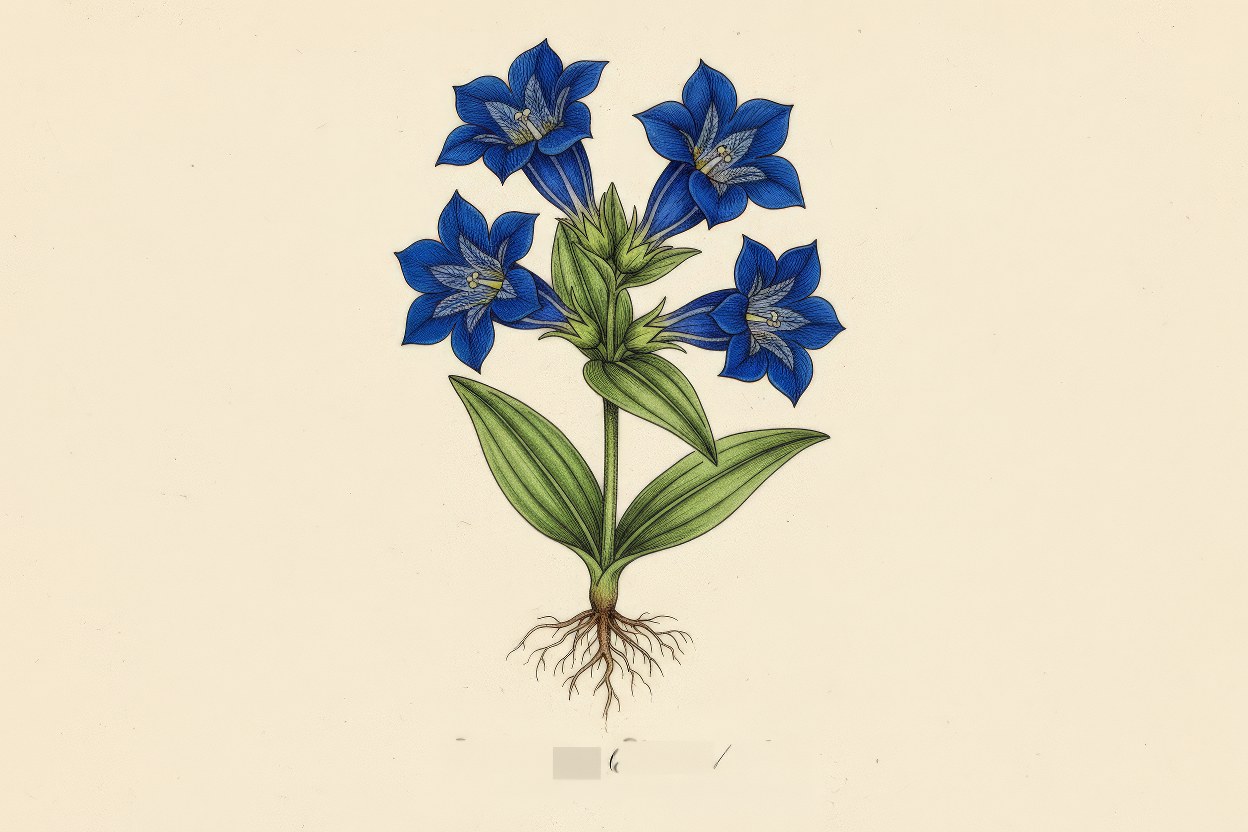
12. Gentiana spp. (Gentian / Tikta)
Medicinal Uses: Digestive stimulant, fever, liver tonic, bitter principles.
Phytoremediation: Wetland purification, alpine stream bank stabilization.
Nutrient Uptake: Alkaloid-rich, nutrient concentrator from poor soils.
Growing Conditions: 2500-4500m, wet meadows, stunning blue flowers.
Synergy: Deep taproot improves soil structure, water infiltration.
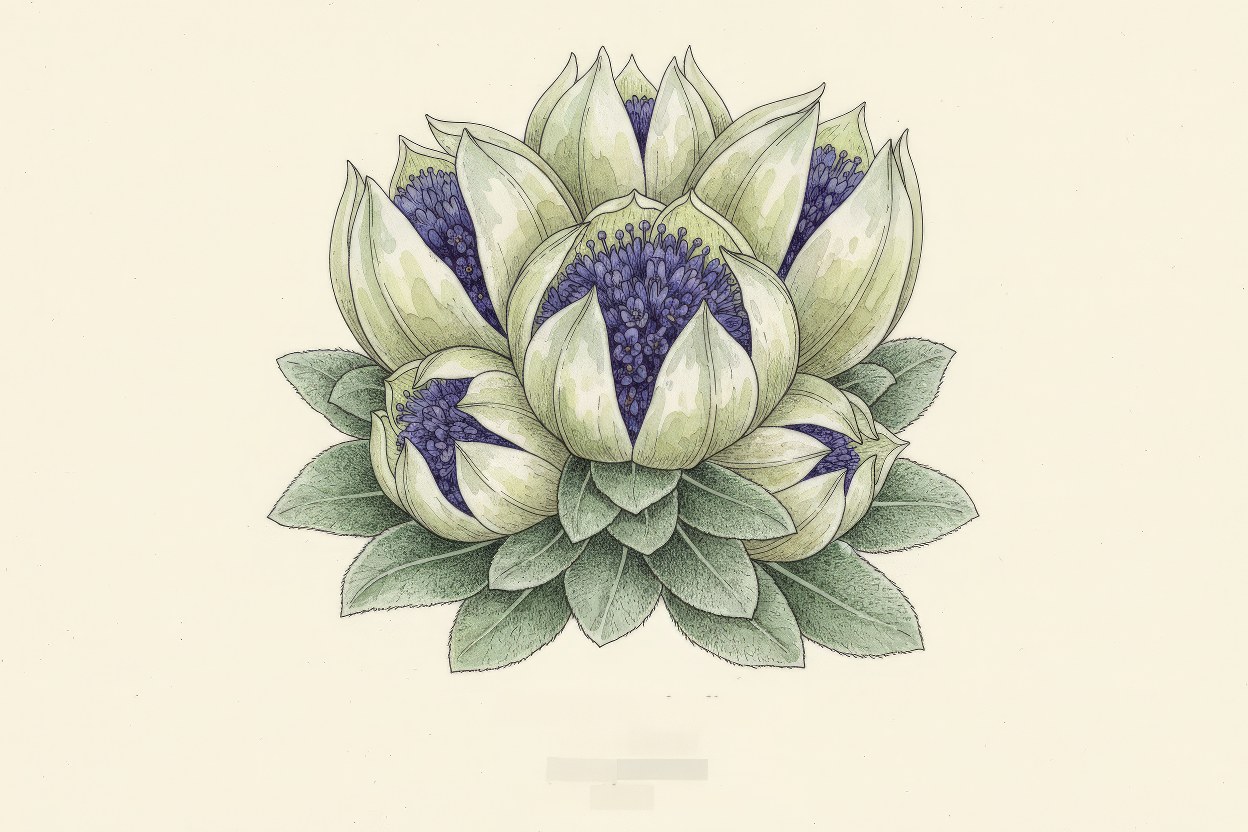
13. Saussurea obvallata (Brahma Kamal)
Medicinal Uses: Bronchial ailments, diuretic, sacred offering plant.
Phytoremediation: High-altitude soil formation, organic matter contribution.
Nutrient Uptake: Specialized mineral uptake from alpine substrates.
Growing Conditions: 3500-4800m, rocky slopes, night-blooming.
Synergy: Sacred plant with spiritual/cultural preservation value, endemic species.
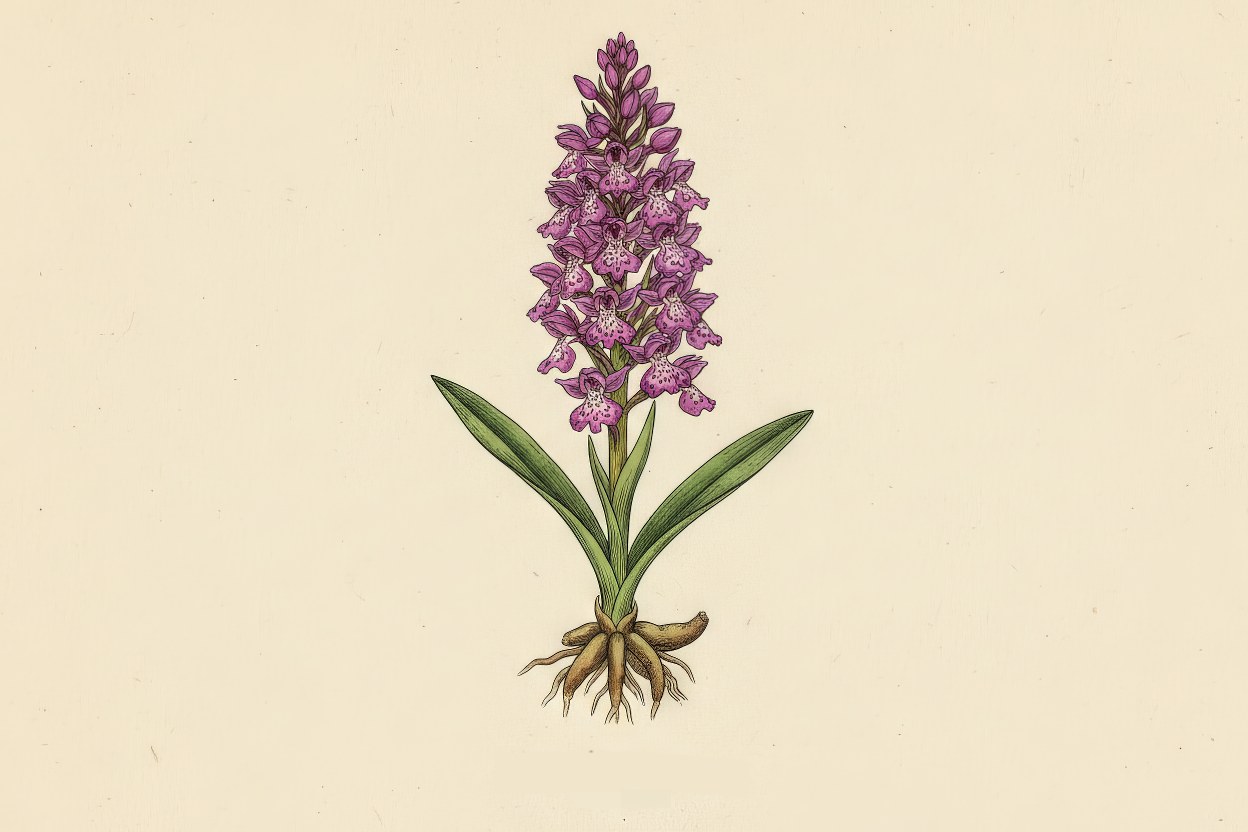
14. Dactylorhiza hatagirea (Marsh Orchid)
Medicinal Uses: Aphrodisiac, strength tonic, fertility enhancement (panchaunle).
Phytoremediation: Wetland biodiversity indicator, mycorrhizal associations.
Nutrient Uptake: Mycorrhizal fungal partnerships for nutrient acquisition.
Growing Conditions: 2800-4000m, marshy areas, endangered species.
Synergy: Supports essential fungal networks, indicator of pristine wetlands.
III. Traditional Chinese Medicine Plants
Category Overview: Selected by AquaSai for their proven efficacy in Traditional Chinese Medicine and suitability to Kathmandu Valley conditions. These species bridge ancient healing traditions with modern phytoremediation applications.
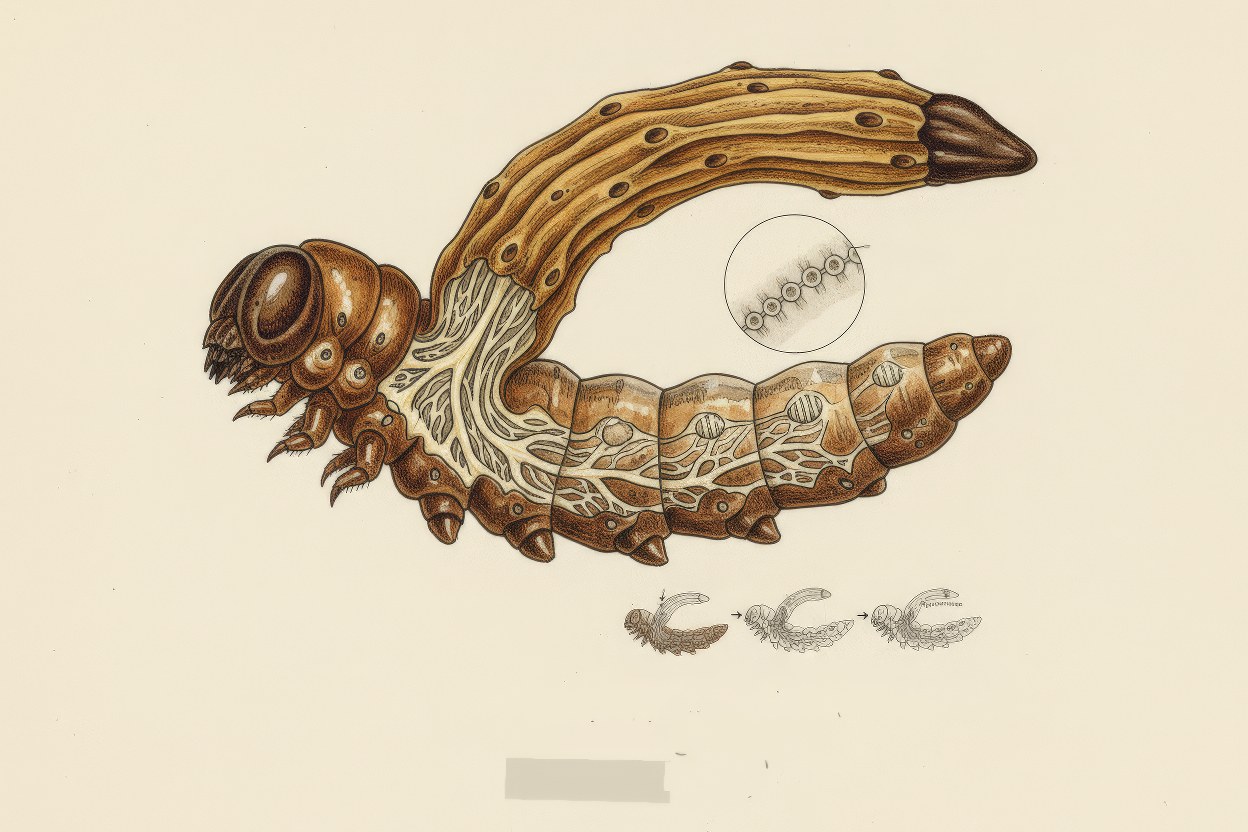
15. Cordyceps sinensis (Yarsagumba)
Medicinal Uses: Energy tonic, respiratory health, kidney function, "Himalayan gold."
Phytoremediation: Organic matter decomposition, nutrient cycling.
Nutrient Uptake: Fungal nutrient cycling in alpine ecosystems.
Growing Conditions: 3000-5000m, specific host-parasite relationship with ghost moth larvae.
Synergy: Indicator of pristine alpine ecosystems, extremely valuable.

16. Zanthoxylum armatum (Timur / Sichuan Pepper)
Medicinal Uses: Toothache relief, digestive stimulant, antimicrobial, characteristic numbing sensation.
Phytoremediation: Erosion control on slopes, thorny shrub for bank stabilization.
Nutrient Uptake: Drought-tolerant, mineral accumulator from poor soils.
Growing Conditions: 1000-2500m, rocky slopes.
Synergy: Provides food and medicine simultaneously, wildlife protection.
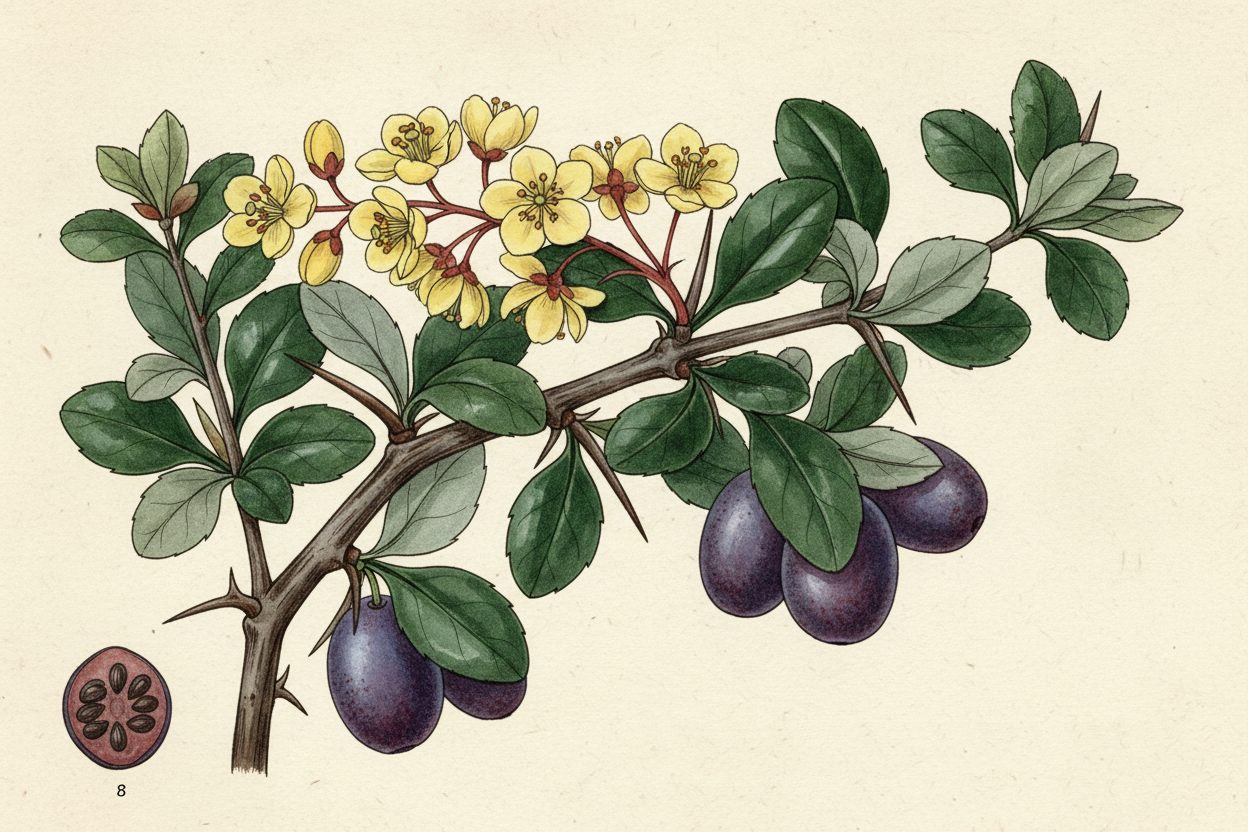
17. Berberis asiatica (Chutro / Barberry)
Medicinal Uses: Eye problems, antimicrobial (berberine), liver support, fever.
Phytoremediation: Soil stabilization, heavy metal tolerance.
Nutrient Uptake: Alkaloid concentration from soil nutrients, berberine accumulator.
Growing Conditions: 1200-3600m, adaptable to various soil conditions.
Synergy: Wildlife food source (berries), thorny protection for vulnerable species.
IV. Aquatic & Wetland Phytoremediation Plants
Category Overview: The core of AquaSai's Bagmati River phytoremediation strategy. These aquatic and wetland species are the workhorses of water purification, removing heavy metals, excess nutrients (nitrogen and phosphorus), and organic pollutants through natural bioengineering processes in constructed wetlands and riparian zones.
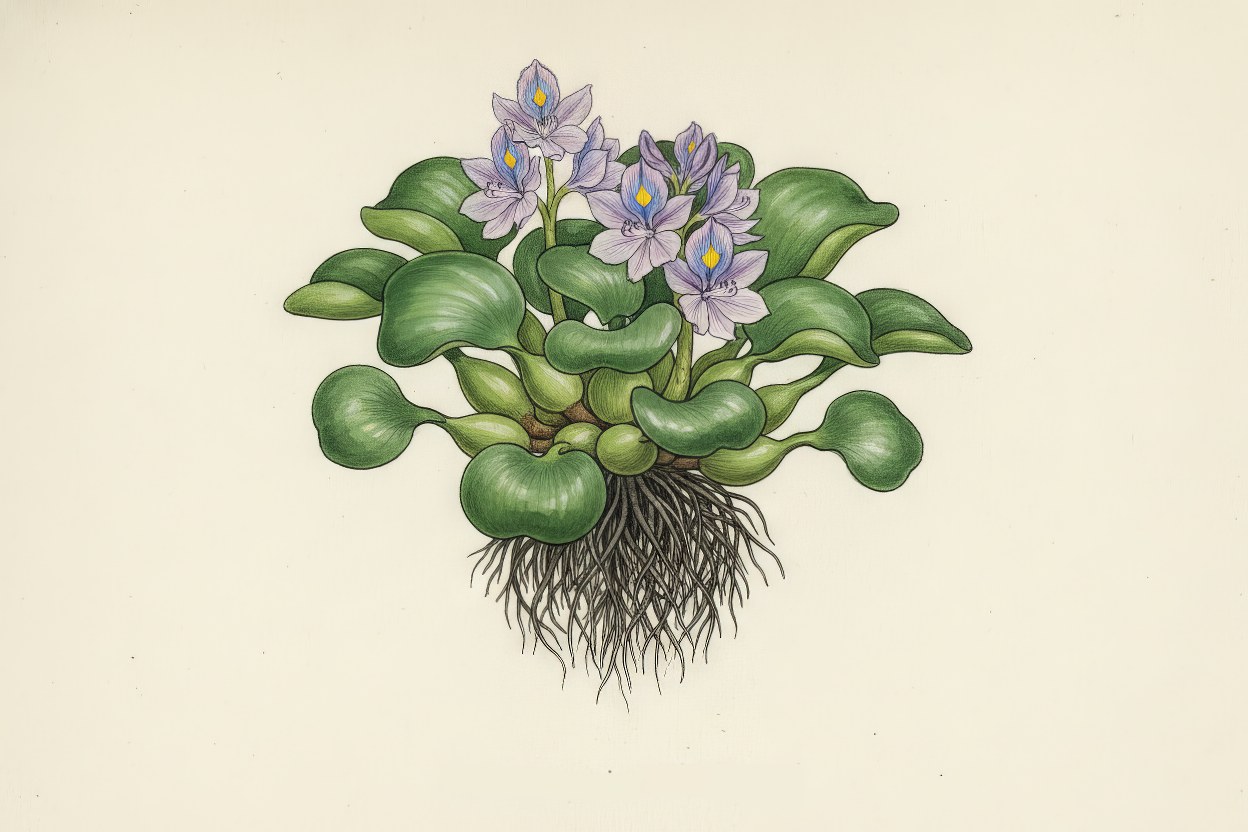
18. Eichhornia crassipes (Water Hyacinth)
Phytoremediation: Exceptional heavy metal removal (Cadmium, Chromium, Lead, Mercury), 60-80% nitrogen uptake, 65-85% phosphorus uptake.
Nutrient Uptake: Removes up to 60-80% nitrogen, 65-85% phosphorus from eutrophic water bodies.
Growing Conditions: Floating aquatic, warm seasons, rapid growth rate.
Synergy: High biomass production for harvest, oxygen release, constructed wetland component.
Note: Requires controlled management in AquaSai systems to prevent invasiveness. Harvest for composting or biogas.
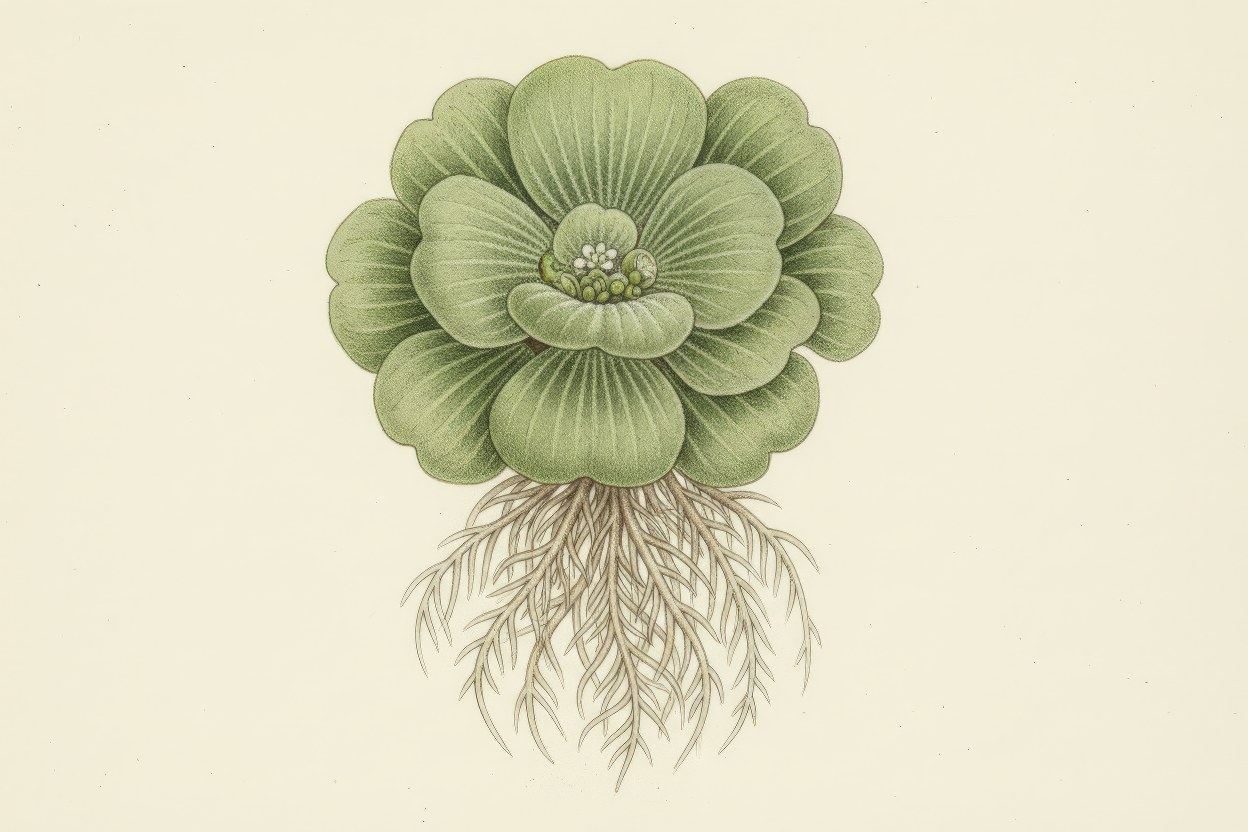
19. Pistia stratiotes (Water Lettuce)
Phytoremediation: Heavy metals (Lead, Copper, Zinc), organic pollutants, 70-85% nitrogen removal.
Nutrient Uptake: 70-85% nitrogen removal efficiency from wastewater.
Growing Conditions: Floating, still or slow-moving water.
Synergy: Shades water surface, reduces algal blooms, mosquito control.
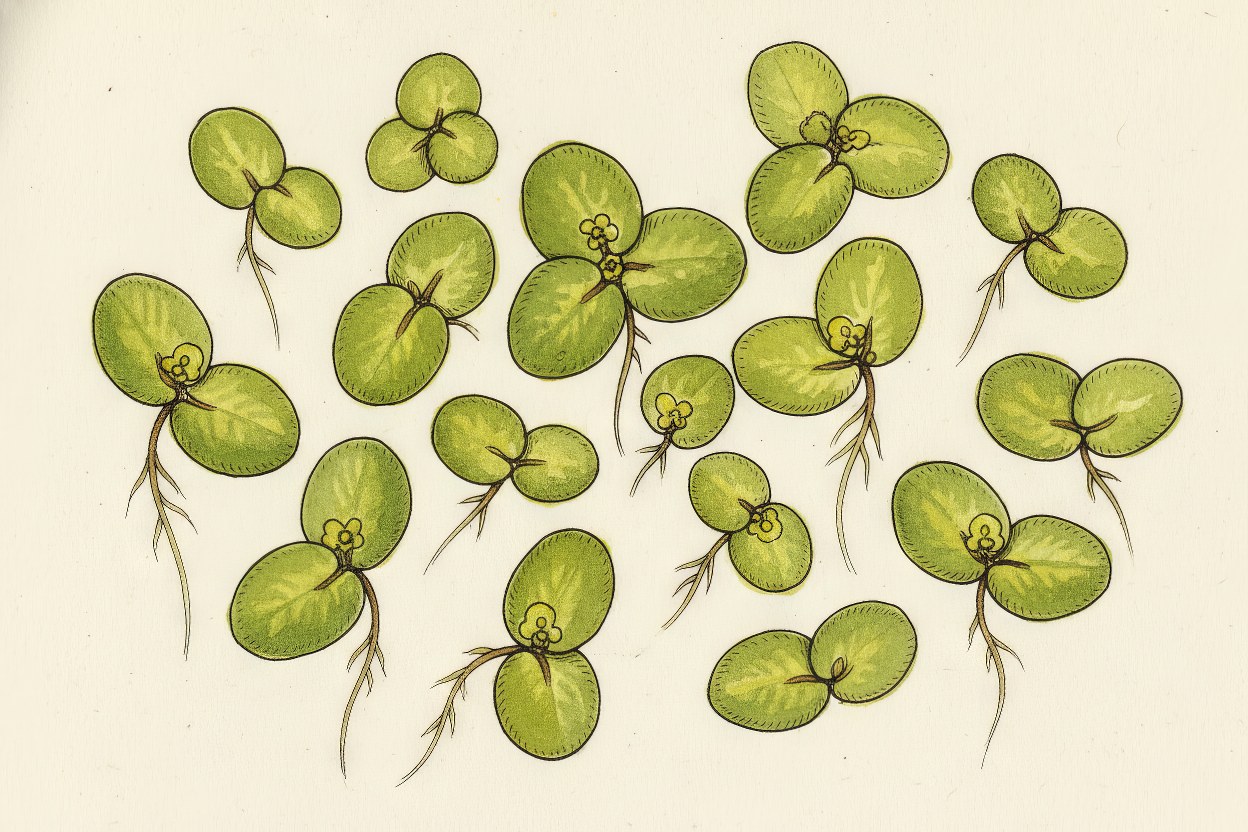
20. Lemna minor (Duckweed)
Phytoremediation: Nitrogen, phosphorus, heavy metals, rapid nutrient sequestration.
Nutrient Uptake: Rapid growth, 50-75% nutrient removal, doubles biomass in 2-3 days.
Growing Conditions: Floating, various water conditions, cold-tolerant.
Synergy: Fish food, livestock feed, fastest-growing plant, easy harvest.
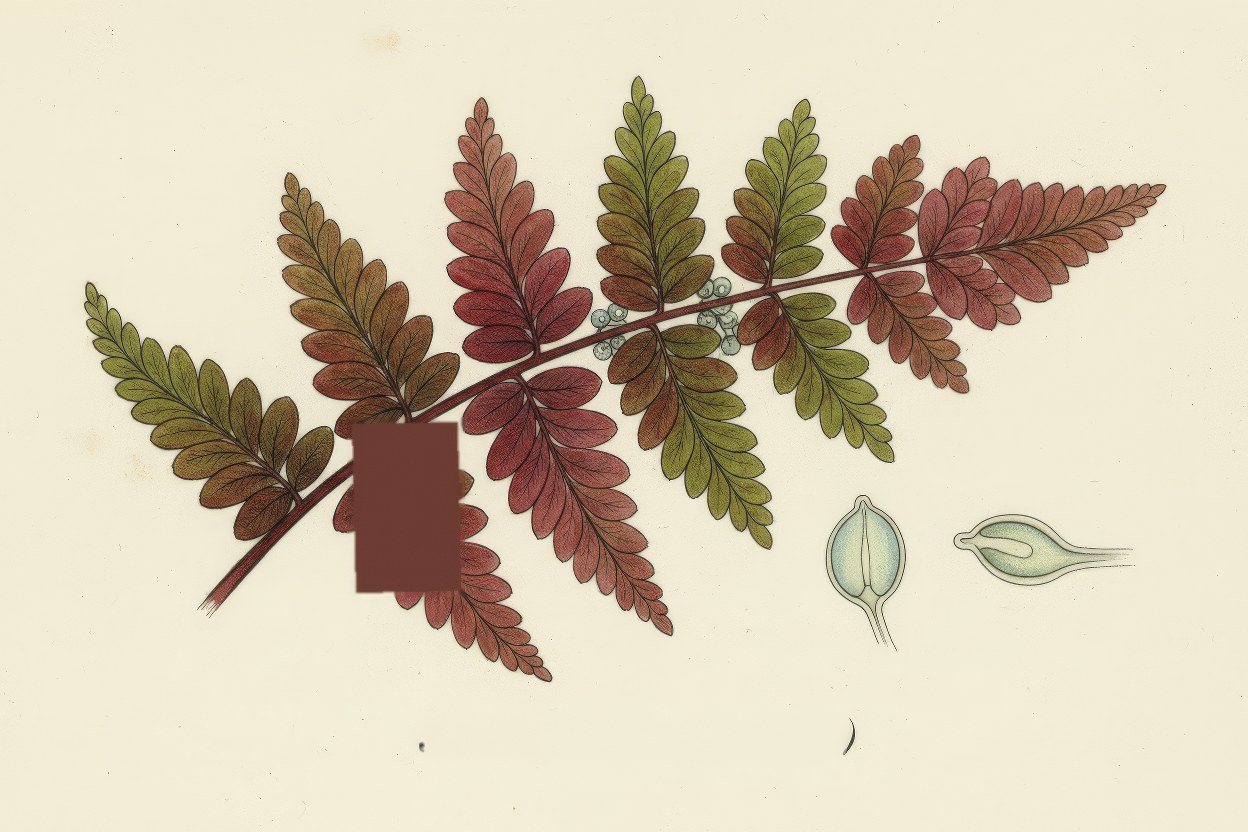
21. Azolla filiculoides (Water Fern)
Phytoremediation: Nitrogen fixation via Anabaena cyanobacteria symbiosis, heavy metal accumulation.
Nutrient Uptake: Symbiotic nitrogen fixation with cyanobacteria, atmospheric N capture.
Growing Conditions: Floating, prefers still water, forms dense mats.
Synergy: Natural fertilizer when composted, atmospheric nitrogen capture, rice paddy tradition.
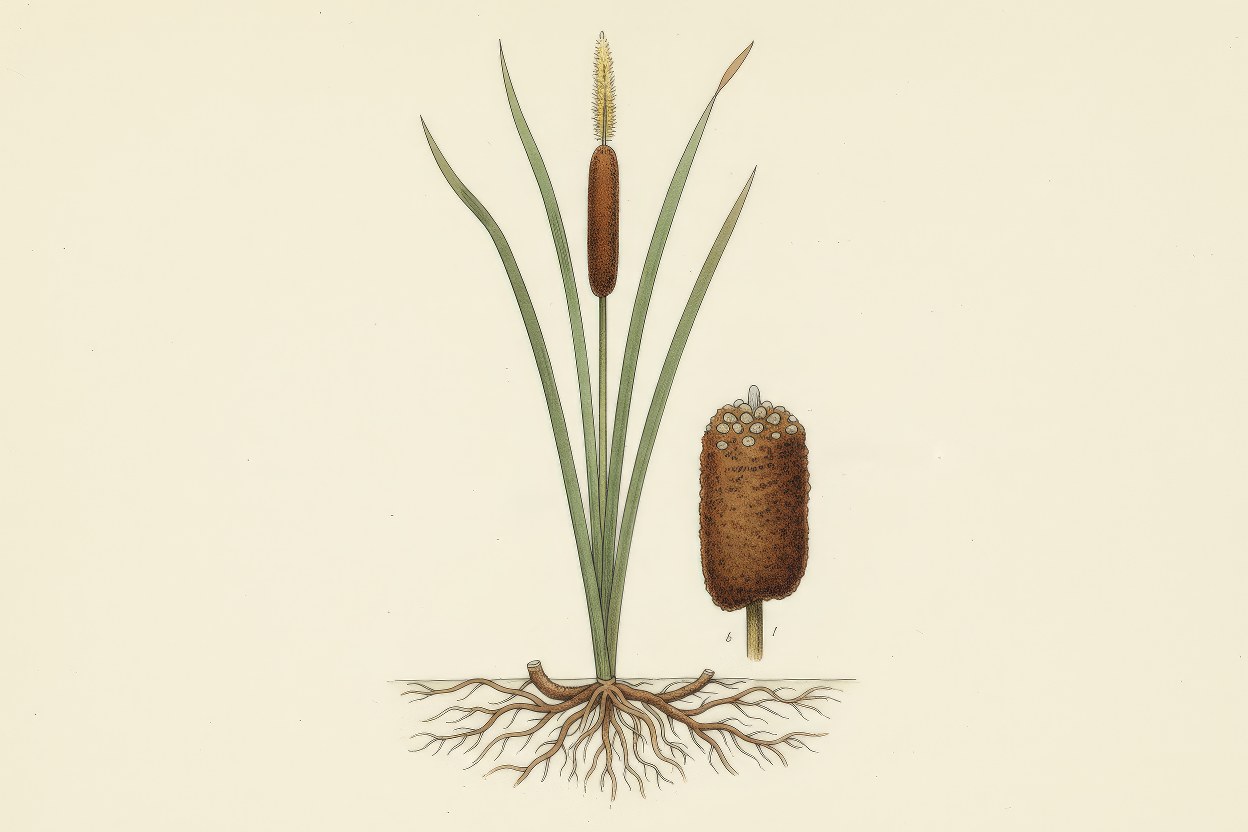
22. Typha latifolia (Cattail / Pater)
Phytoremediation: Heavy metals (Cadmium, Copper, Zinc), organic compounds, 60-70% nitrogen, 40-60% phosphorus removal.
Nutrient Uptake: 60-70% nitrogen, 40-60% phosphorus removal from wastewater.
Growing Conditions: Emergent wetland, 0-1800m, tolerates various water depths.
Synergy: Provides structure for biofilm formation, wildlife habitat, traditional uses (mats, food), high biomass.
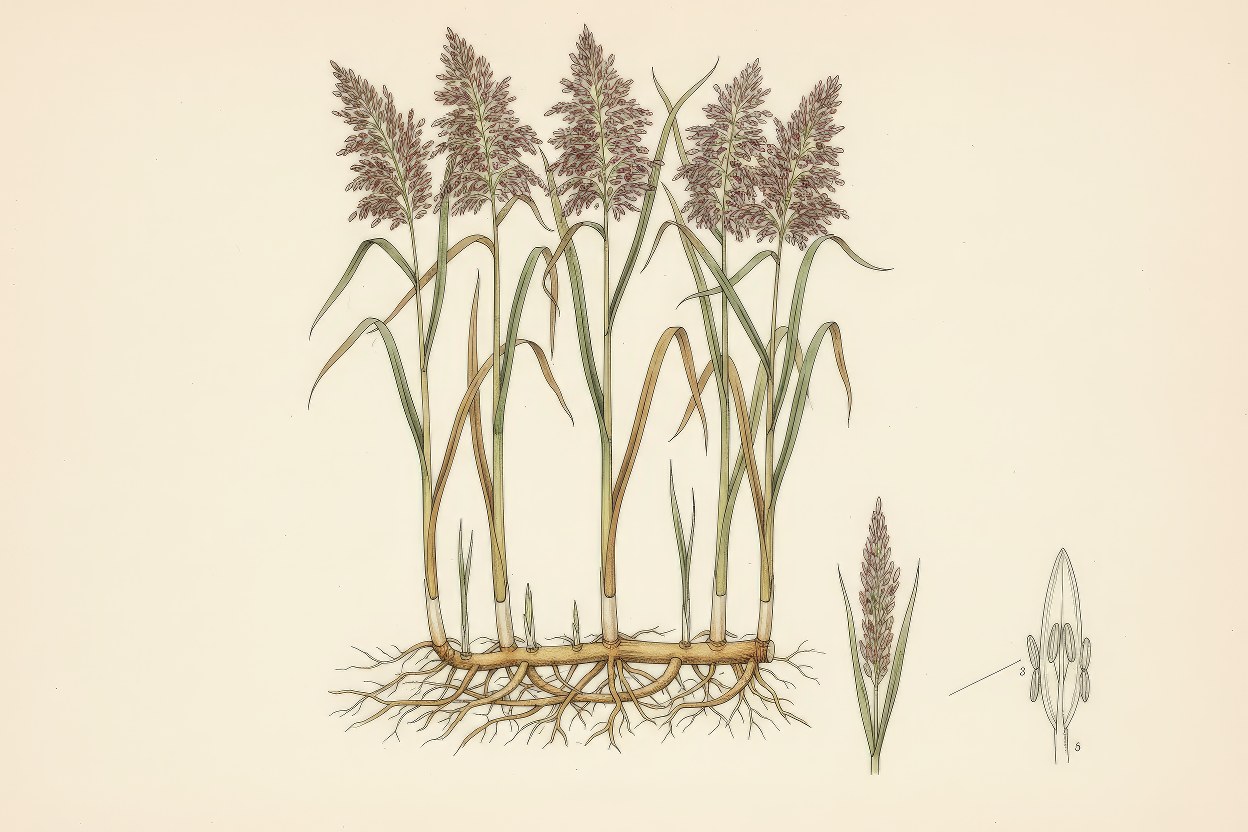
23. Phragmites australis (Common Reed)
Phytoremediation: Heavy metals, pesticides, organic pollutants, 50-70% nutrient removal.
Nutrient Uptake: High biomass production, 50-70% nutrient removal efficiency.
Growing Conditions: Emergent, 0-2500m, forms extensive stands.
Synergy: Extensive rhizome filtration system, oxygen transfer to root zone, construction material.
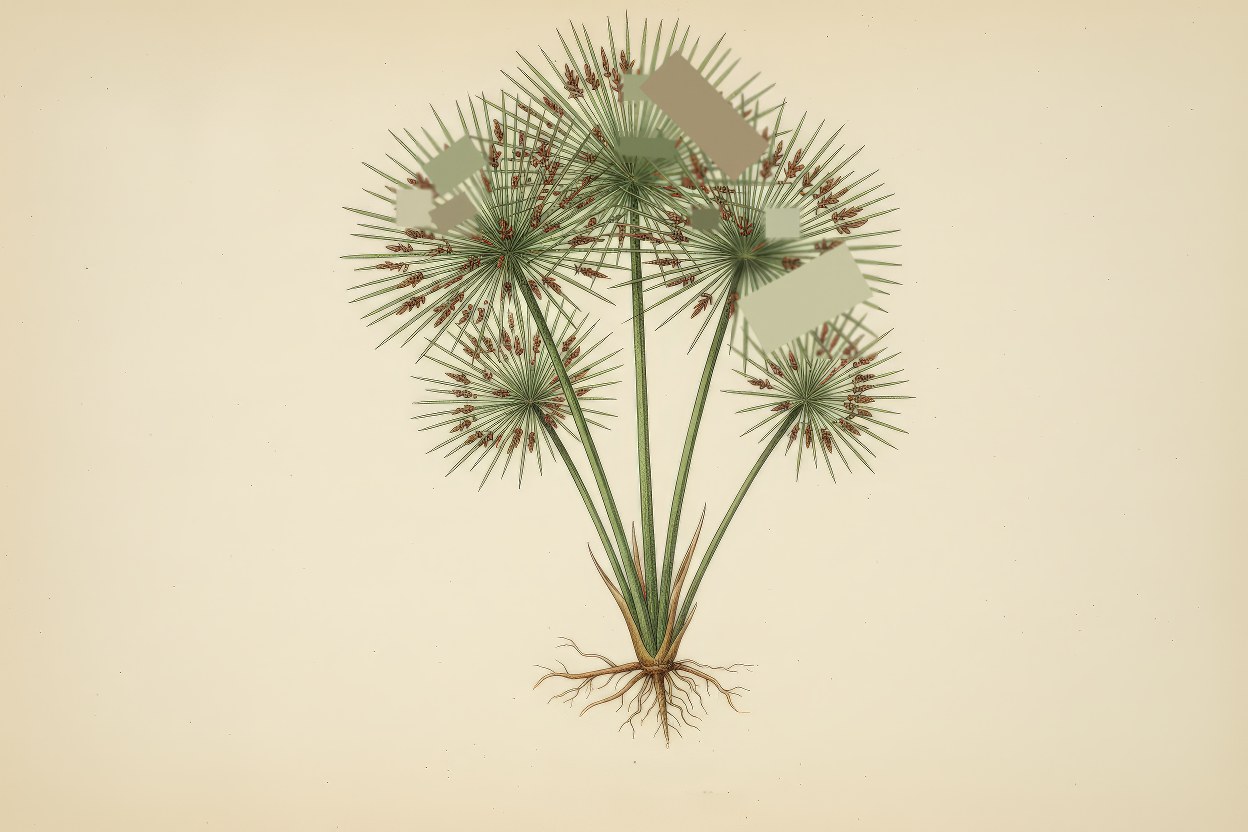
24. Cyperus alternifolius (Papyrus / Mothe)
Phytoremediation: Nitrogen, phosphorus, heavy metals, 40-60% removal efficiency.
Nutrient Uptake: 40-60% removal efficiency for nutrients.
Growing Conditions: Emergent, warm climates, ornamental value.
Synergy: Tall structure creates vertical habitat, aesthetic appeal in urban wetlands.
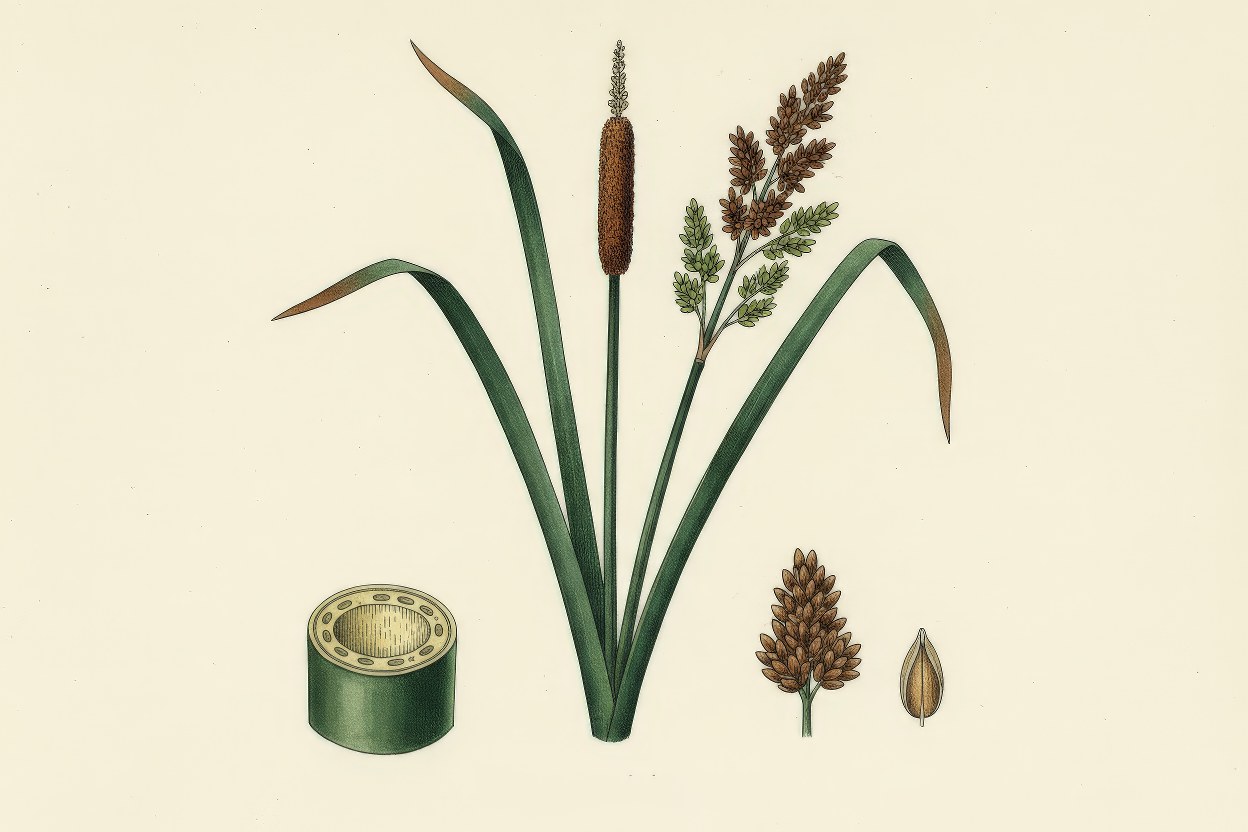
25. Scirpus validus (Bulrush)
Phytoremediation: Heavy metals, organic compounds, 45-65% nutrient removal.
Nutrient Uptake: 45-65% nutrient removal efficiency.
Growing Conditions: Emergent, shallow water, various substrates.
Synergy: Sediment stabilization, wave dampening, waterfowl habitat.
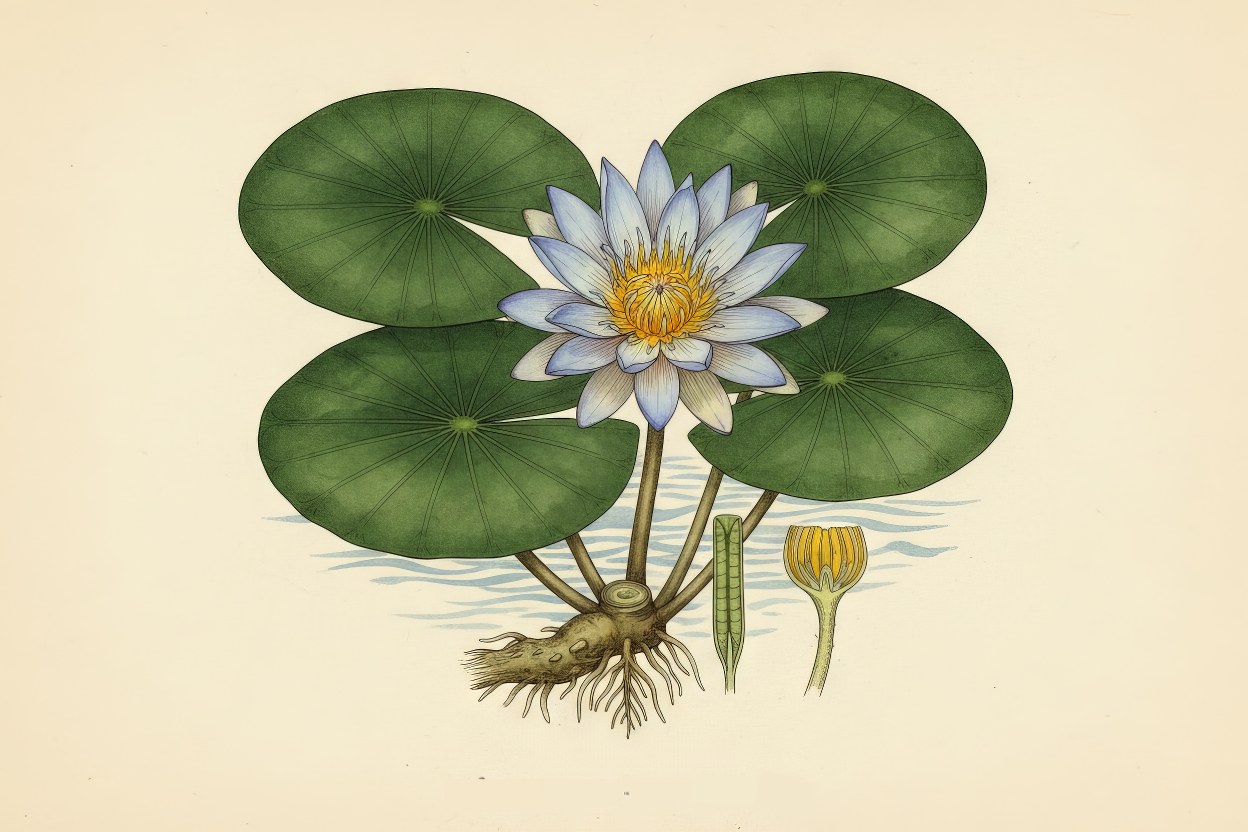
26. Nymphaea nouchali (Blue Water Lily)
Medicinal Uses: Ayurvedic applications, digestive health, skin conditions, sacred flower.
Phytoremediation: Nutrient absorption from sediments, water oxygenation.
Nutrient Uptake: Moderate nitrogen/phosphorus uptake from benthic zone.
Growing Conditions: Floating-rooted, 300-1400m, still water.
Synergy: Culturally significant (Buddhist/Hindu symbolism), aesthetic value, shades water.
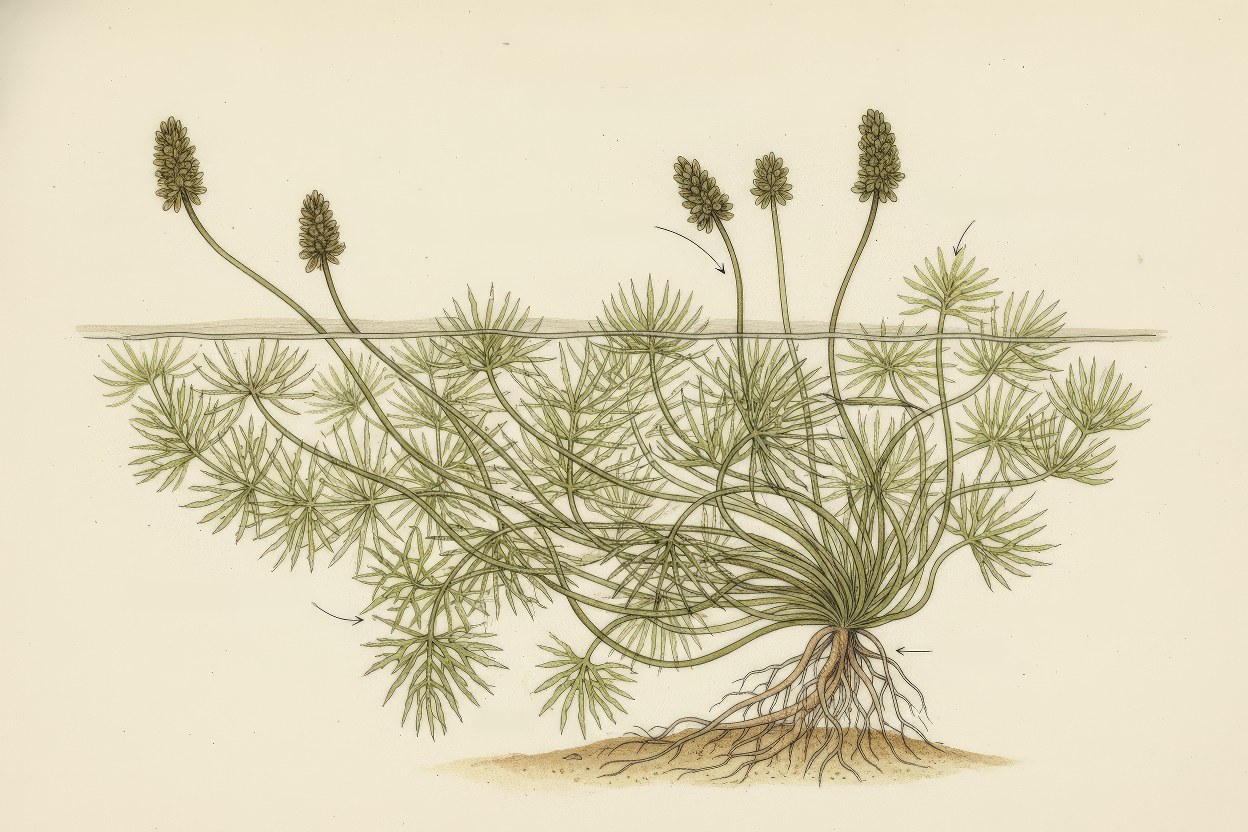
27. Potamogeton pectinatus (Pondweed)
Phytoremediation: Heavy metals, nutrient absorption from water column.
Nutrient Uptake: Submerged plant with efficient uptake from water and sediments.
Growing Conditions: Fully submerged, various water depths.
Synergy: Oxygenates water through photosynthesis, fish habitat and spawning substrate.

28. Myriophyllum spicatum (Eurasian Water Milfoil)
Phytoremediation: Nutrients, some heavy metals, fine particulate filtration.
Nutrient Uptake: Fine feathery leaves provide high surface area for absorption.
Growing Conditions: Submerged, moderate to deep water.
Synergy: Oxygen production, fine particulate filtration, dense underwater habitat.
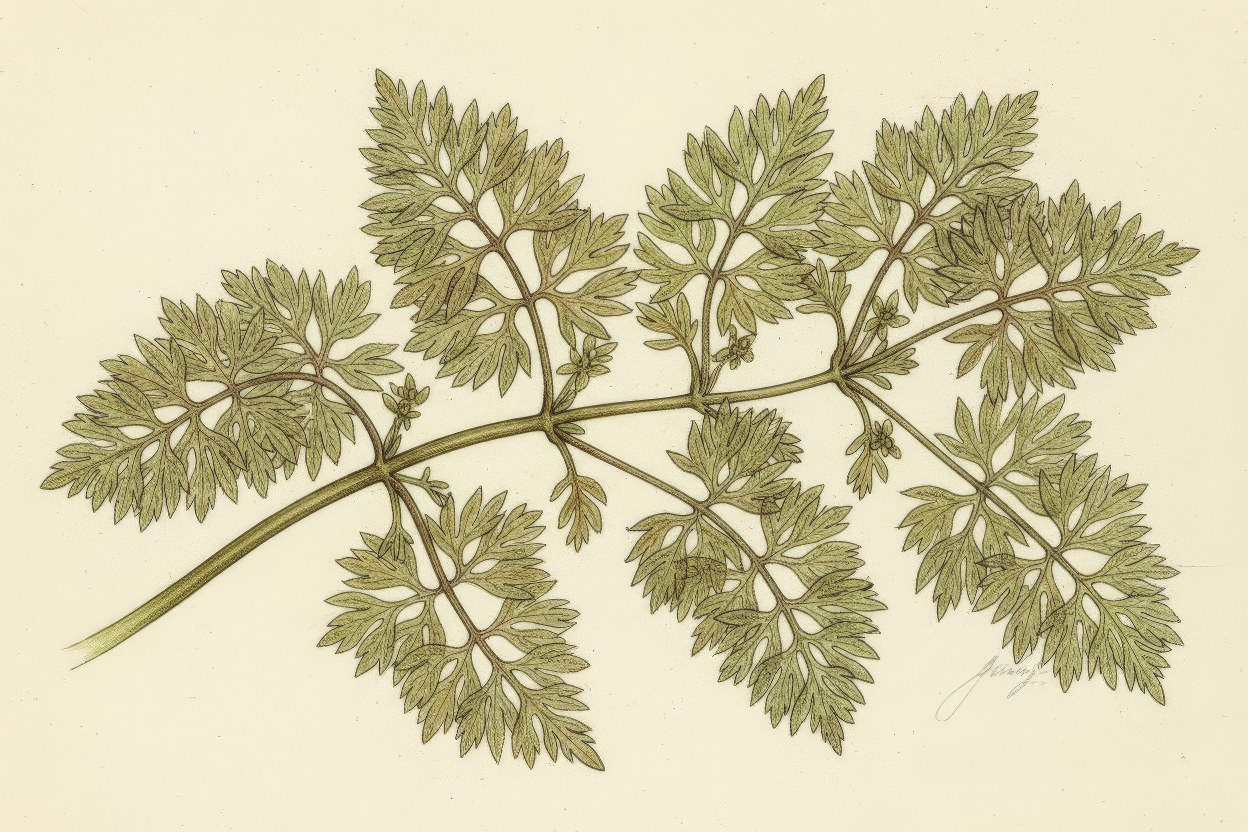
29. Ceratophyllum demersum (Hornwort)
Phytoremediation: Heavy metals, allelopathic algae control (natural herbicide compounds).
Nutrient Uptake: Rootless, absorbs nutrients through stems and leaves directly.
Growing Conditions: Submerged, free-floating or anchored.
Synergy: Natural algae suppression through allelopathy, no rooting substrate needed.
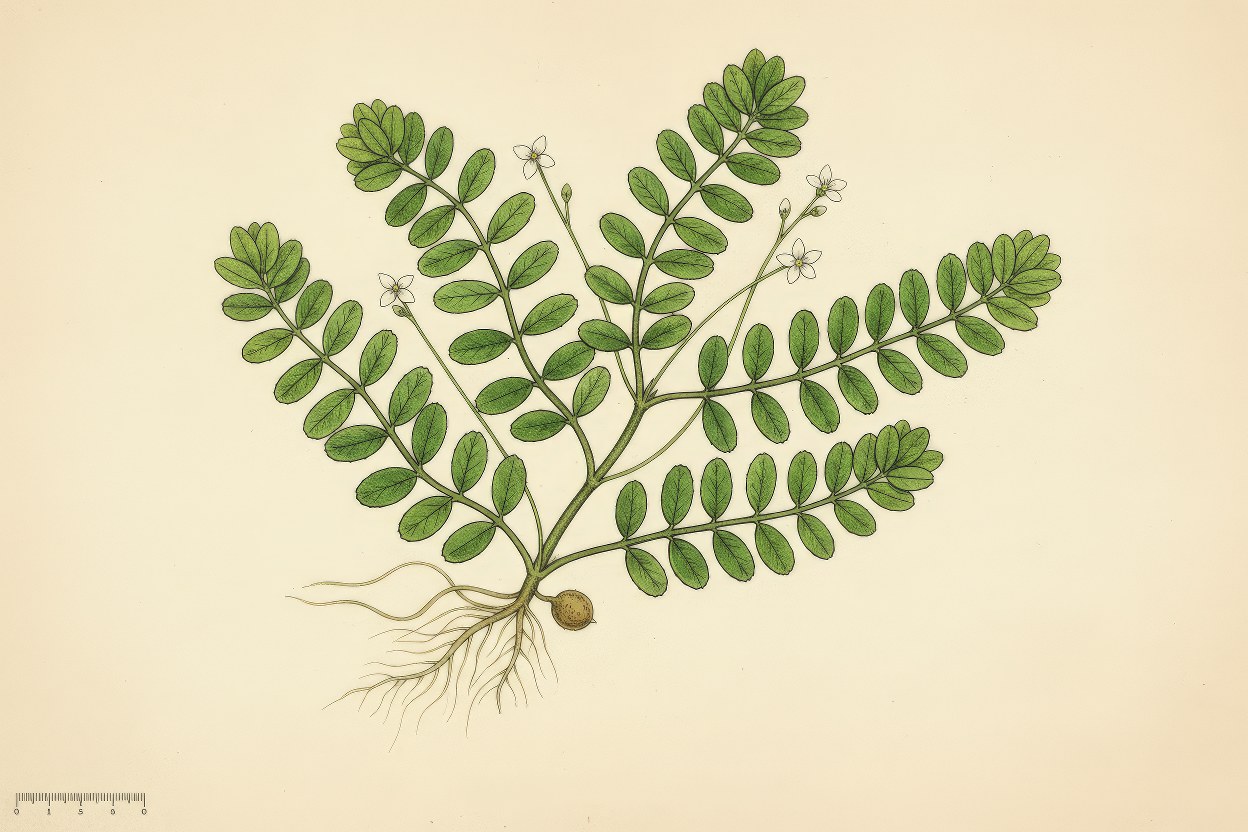
30. Hydrilla verticillata (Hydrilla)
Phytoremediation: Nutrients, sediment stabilization, rapid pollutant uptake.
Nutrient Uptake: Rapid growth rate enables efficient nutrient uptake.
Growing Conditions: Submerged, wide tolerance range.
Synergy: Dense growth provides extensive habitat formation, sediment anchoring.
Note: Monitor for invasiveness in AquaSai controlled systems, regular harvesting recommended.
V. Terrestrial Plants for Riparian Zones
Category Overview: AquaSai's riparian zone strategy focuses on deep-rooted trees and shrubs that stabilize riverbanks, filter surface runoff before it enters the Bagmati River, and provide ecosystem services including erosion control, wildlife corridors, and carbon sequestration.
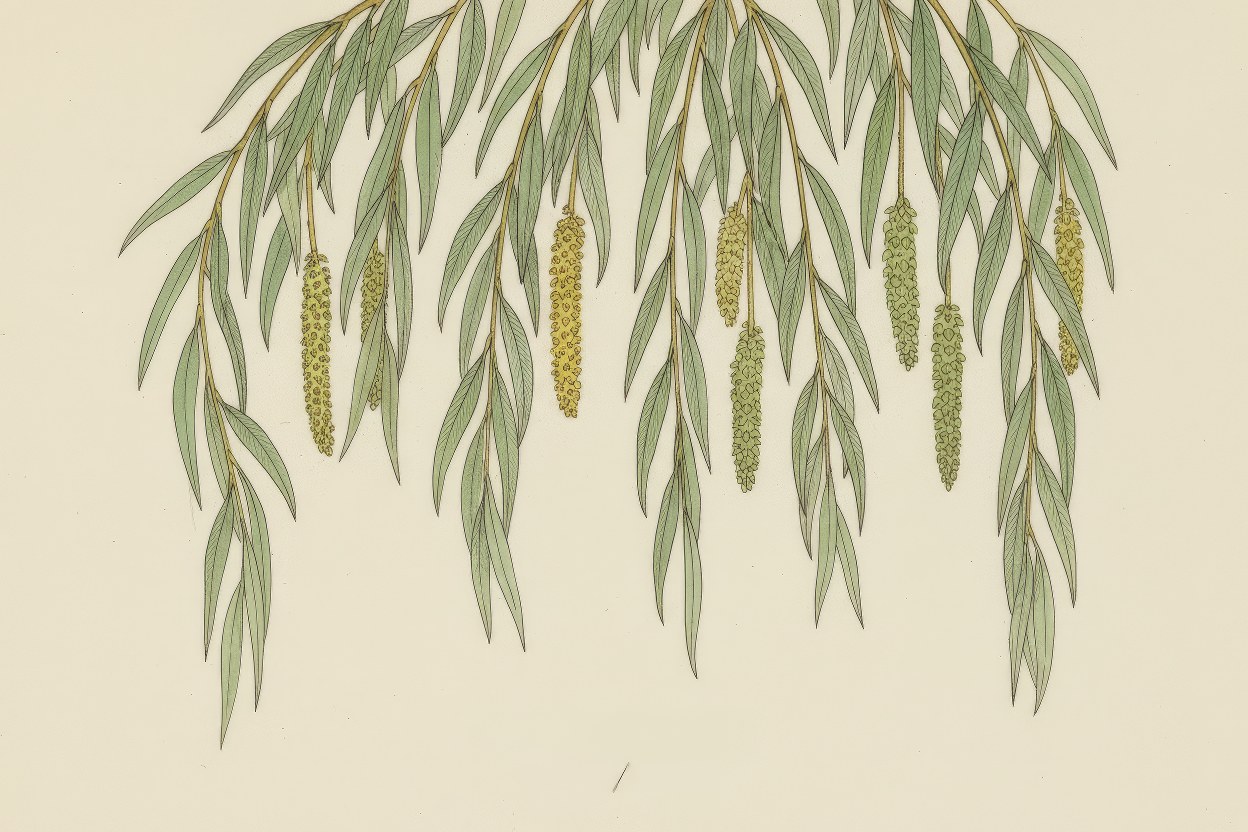
31. Salix babylonica (Willow / Bhains)
Phytoremediation: Heavy metal accumulation (Cadmium, Zinc, Copper), soil stabilization, phytoremediation champion.
Nutrient Uptake: Fast-growing, high biomass production, nitrogen uptake.
Growing Conditions: Riparian zones, 300-2500m, waterlogged tolerance.
Synergy: Erosion control, easy propagation from cuttings (living stakes), extensive root system.

32. Populus ciliata (Poplar)
Phytoremediation: Heavy metals, organic pollutants (PCBs, pesticides, petroleum compounds).
Nutrient Uptake: Rapid growth, high water uptake (phyto-hydraulic control).
Growing Conditions: Riparian zones, 1000-3000m, requires moist soil.
Synergy: Windbreak, timber production, massive carbon sequestration.
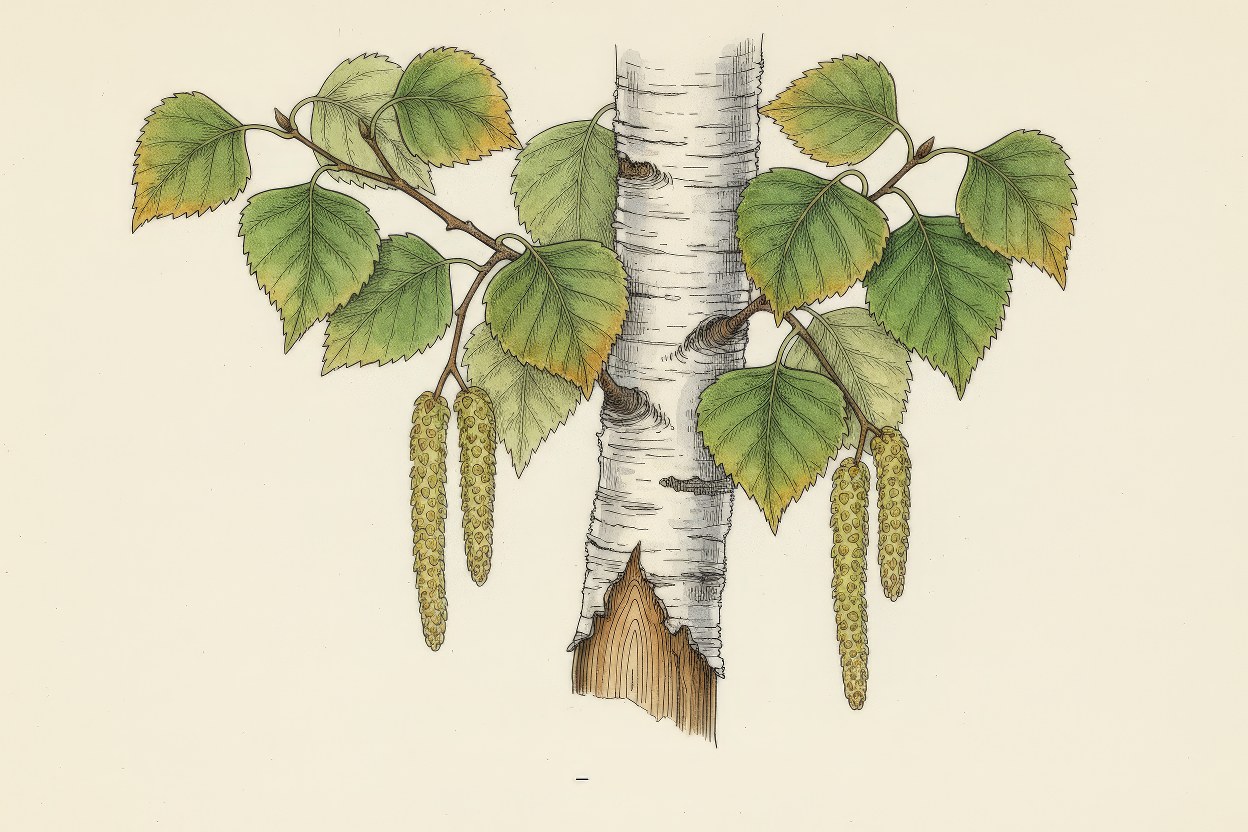
33. Betula utilis (Himalayan Birch)
Medicinal Uses: Tibetan medicine, skin conditions, bark used for sacred texts.
Phytoremediation: Soil improvement, pioneer species for degraded mountain slopes.
Nutrient Uptake: Mycorrhizal associations enhance nutrient acquisition.
Growing Conditions: 2400-4500m, cold-hardy.
Synergy: Sacred bark (bhojpatra), cultural value, paper production, pioneer species.
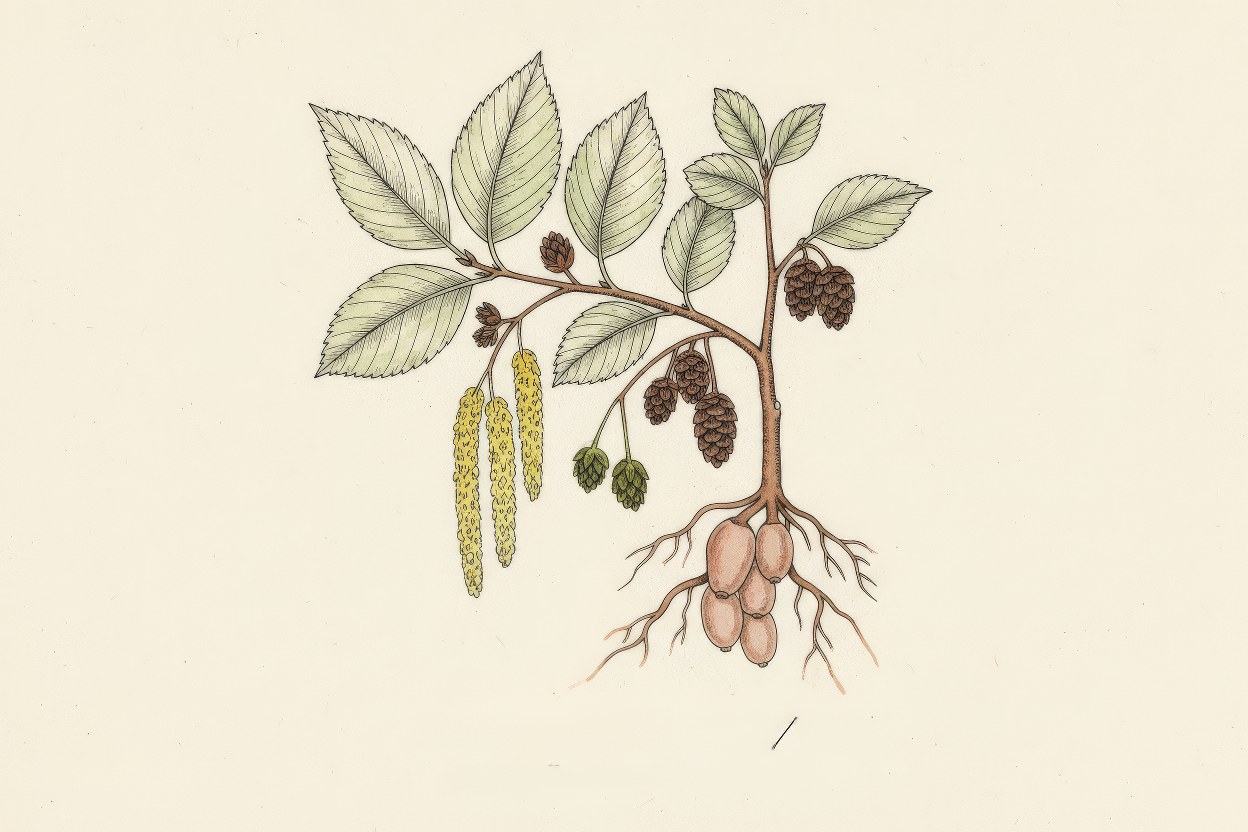
34. Alnus nepalensis (Alder / Utis)
Phytoremediation: Nitrogen fixation via Frankia symbiosis, soil improvement for degraded riparian zones.
Nutrient Uptake: Symbiotic nitrogen fixation (Frankia actinomycetes in root nodules).
Growing Conditions: 500-3000m, riparian zones, landslide areas.
Synergy: Enhances soil fertility for surrounding plants, pioneer in restoration sequences.
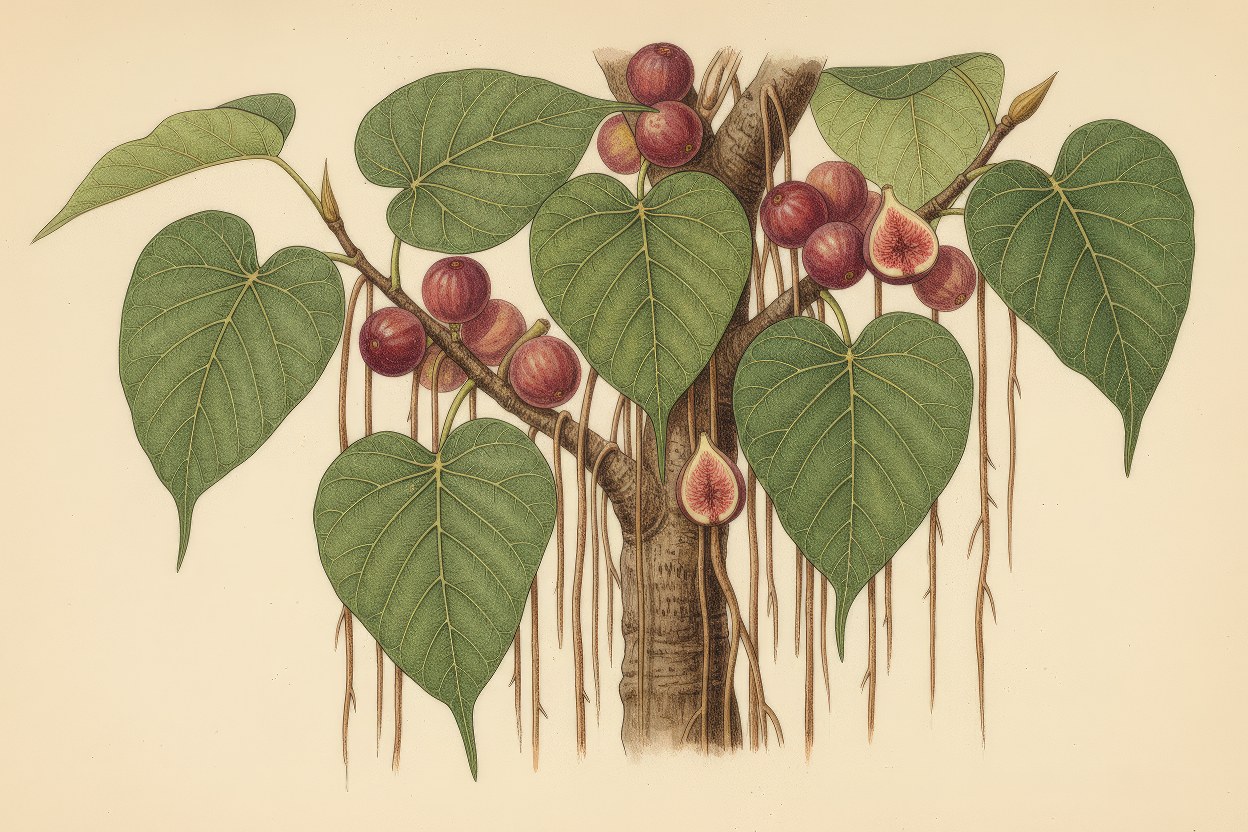
35. Ficus religiosa (Pipal)
Phytoremediation: Air purification (releases oxygen 24 hours), soil stabilization with extensive root network.
Nutrient Uptake: Deep root system accesses deep soil nutrients.
Growing Conditions: 200-1500m, adaptable.
Synergy: Sacred tree (Bodhi tree of Buddha), massive carbon storage, wildlife keystone species.
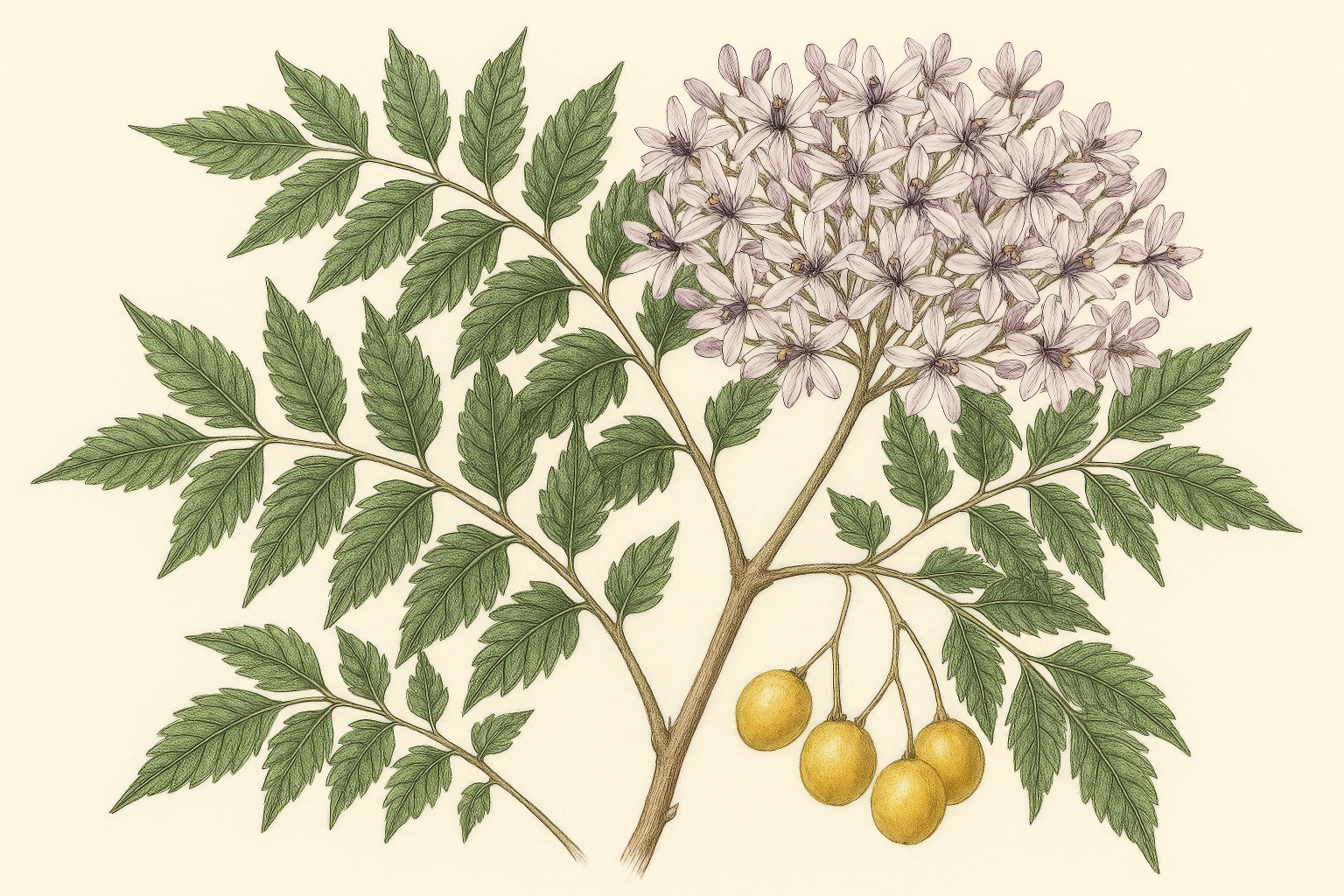
36. Melia azedarach (Bead Tree / Bakaino)
Phytoremediation: Tolerates polluted soils, soil conditioning.
Nutrient Uptake: Moderate, drought-tolerant, adaptable.
Growing Conditions: 300-1800m, hardy.
Synergy: Insecticidal properties (natural pest control), ornamental flowers, beads for prayer malas.
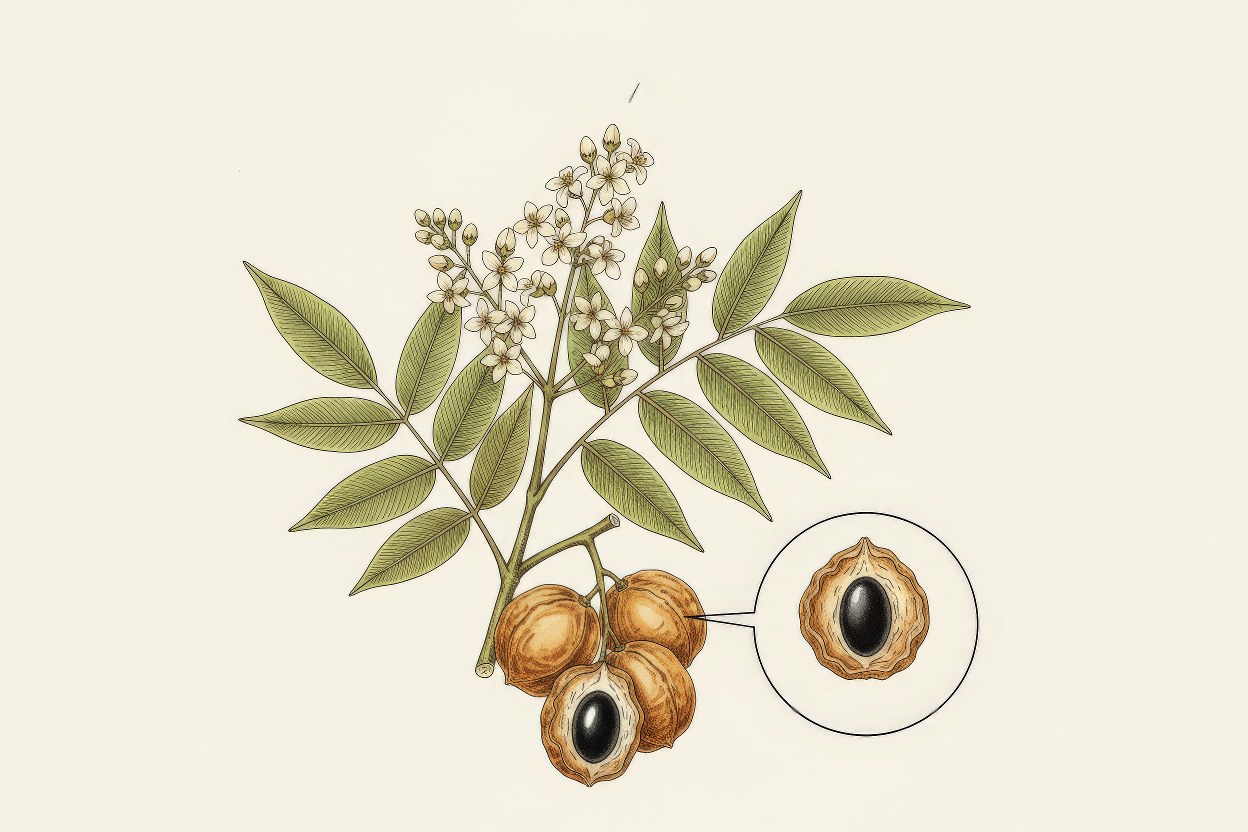
37. Sapindus mukorossi (Soapnut / Ritha)
Medicinal Uses: Dandruff treatment, natural cleanser, hair care.
Phytoremediation: Saponin production, soil conditioning properties.
Nutrient Uptake: Moderate, adaptable to various soils.
Growing Conditions: 900-1500m, deciduous.
Synergy: Economic value (natural detergent production), sustainable livelihoods.
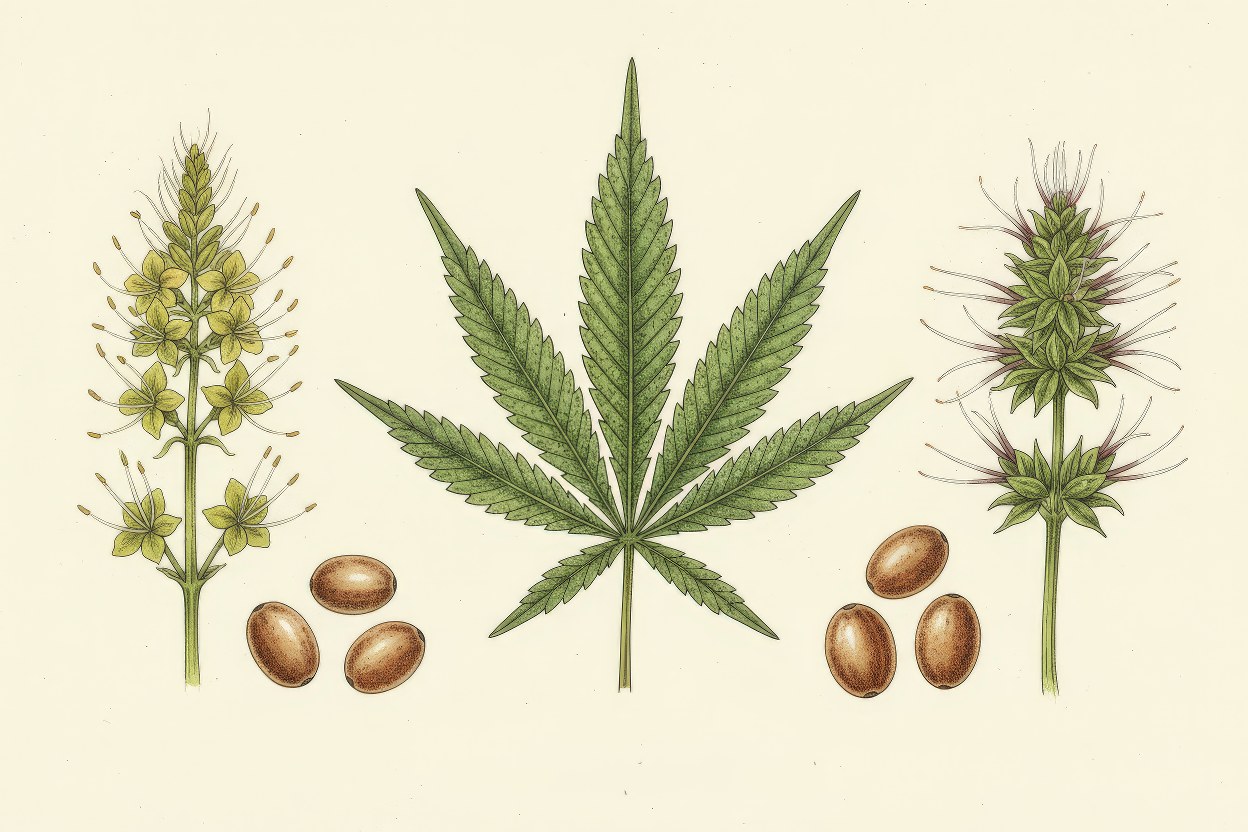
38. Cannabis sativa (Hemp)
Phytoremediation: Exceptional heavy metal removal (Cadmium, Lead, Nickel, Zinc), champion phytoextractor.
Nutrient Uptake: Fast-growing, high biomass production, deep taproot.
Growing Conditions: 300-2500m, adaptable to various soils.
Synergy: Fiber production, oil (omega fatty acids), phytoremediation champion for contaminated sites.
Note: Legal considerations required. AquaSai uses industrial hemp varieties for remediation projects.

39. Urtica dioica (Himalayan Nettle / Sisnu)
Medicinal Uses: Nutritious food (sisnu saag), anti-inflammatory, arthritis, rich in iron/calcium.
Phytoremediation: Nutrient-rich soil indicator, accumulates minerals from soil.
Nutrient Uptake: High nitrogen, iron, calcium accumulator.
Growing Conditions: 1200-4200m, disturbed soils, pioneer species.
Synergy: Edible greens (traditional Nepali cuisine), textile fiber, compost activator.
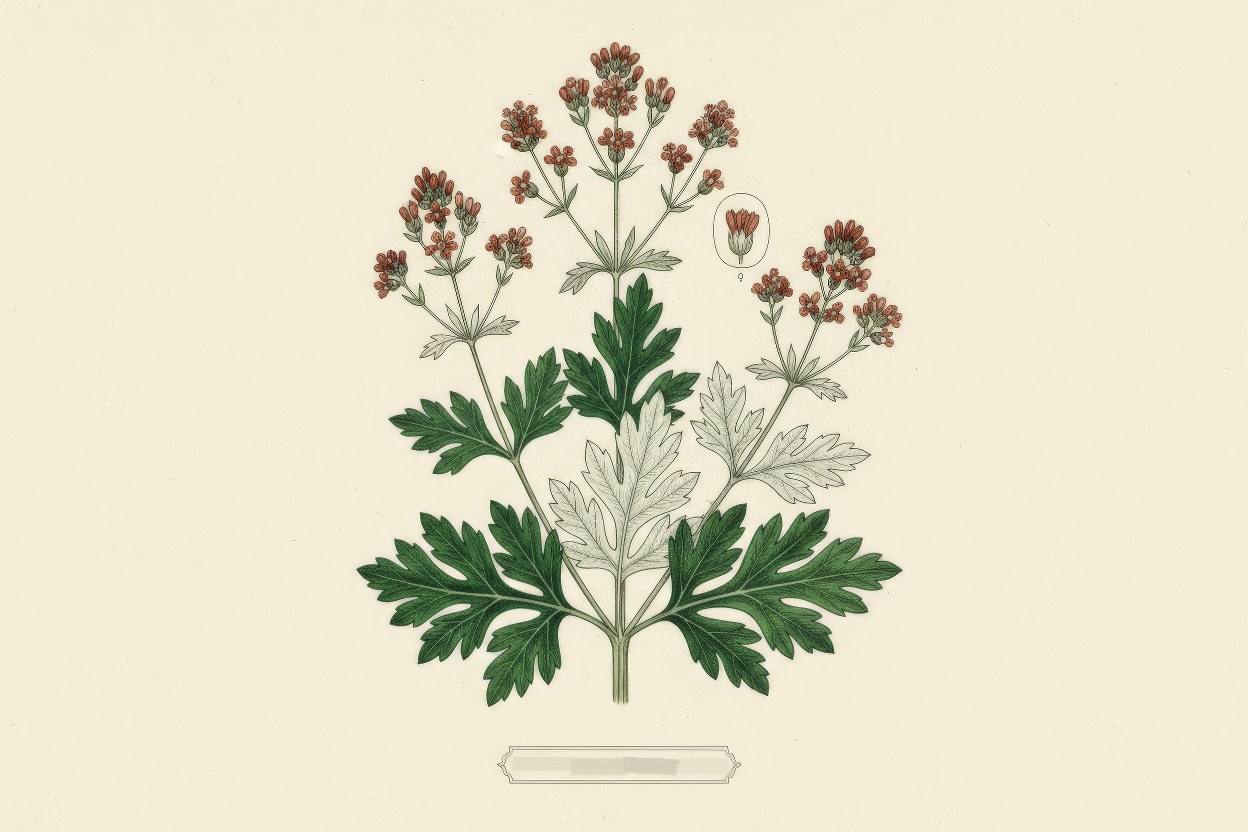
40. Artemisia vulgaris (Mugwort / Titepati)
Medicinal Uses: Digestive aid, antimicrobial, menstrual health, aromatic incense.
Phytoremediation: Soil conditioning, aromatic compounds deter pests.
Nutrient Uptake: Moderate, drought-tolerant.
Growing Conditions: 1200-3000m, ruderal species.
Synergy: Cultural ceremonies (incense), insect repellent, pioneer species.
VI. Nitrogen-Fixing Legumes
Category Overview: Critical components of AquaSai's ecosystem restoration strategy. These legumes form symbiotic relationships with Rhizobium bacteria to fix atmospheric nitrogen, reducing the need for chemical fertilizers and enriching degraded soils around the Bagmati River system.
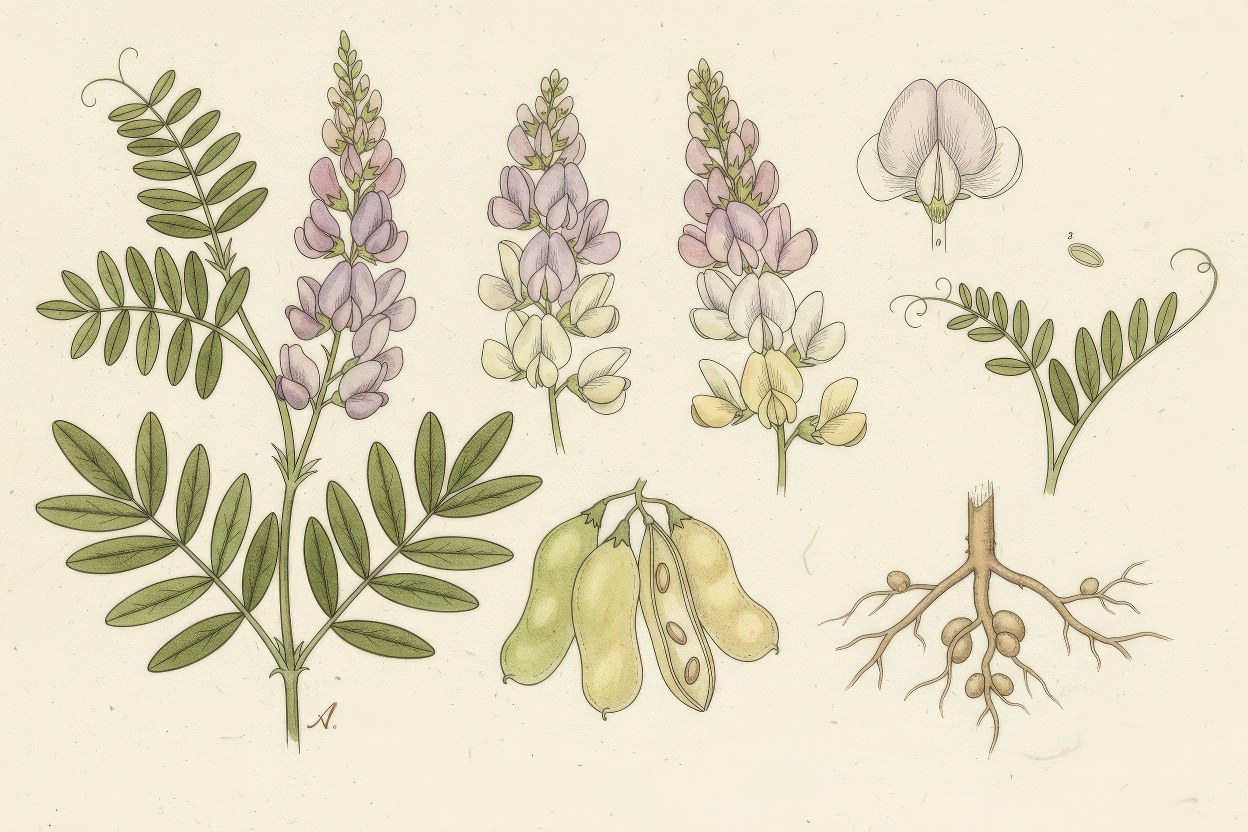
41. Astragalus spp. (Milk Vetch)
Medicinal Uses: Traditional Chinese Medicine (Huang Qi), immune support, adaptogen.
Phytoremediation: Nitrogen fixation, soil enrichment in alpine zones.
Nutrient Uptake: Symbiotic Rhizobium bacteria in root nodules fix atmospheric nitrogen.
Growing Conditions: 2000-4500m, high-altitude legume.
Synergy: Enriches degraded alpine soils, medicinal root harvest.
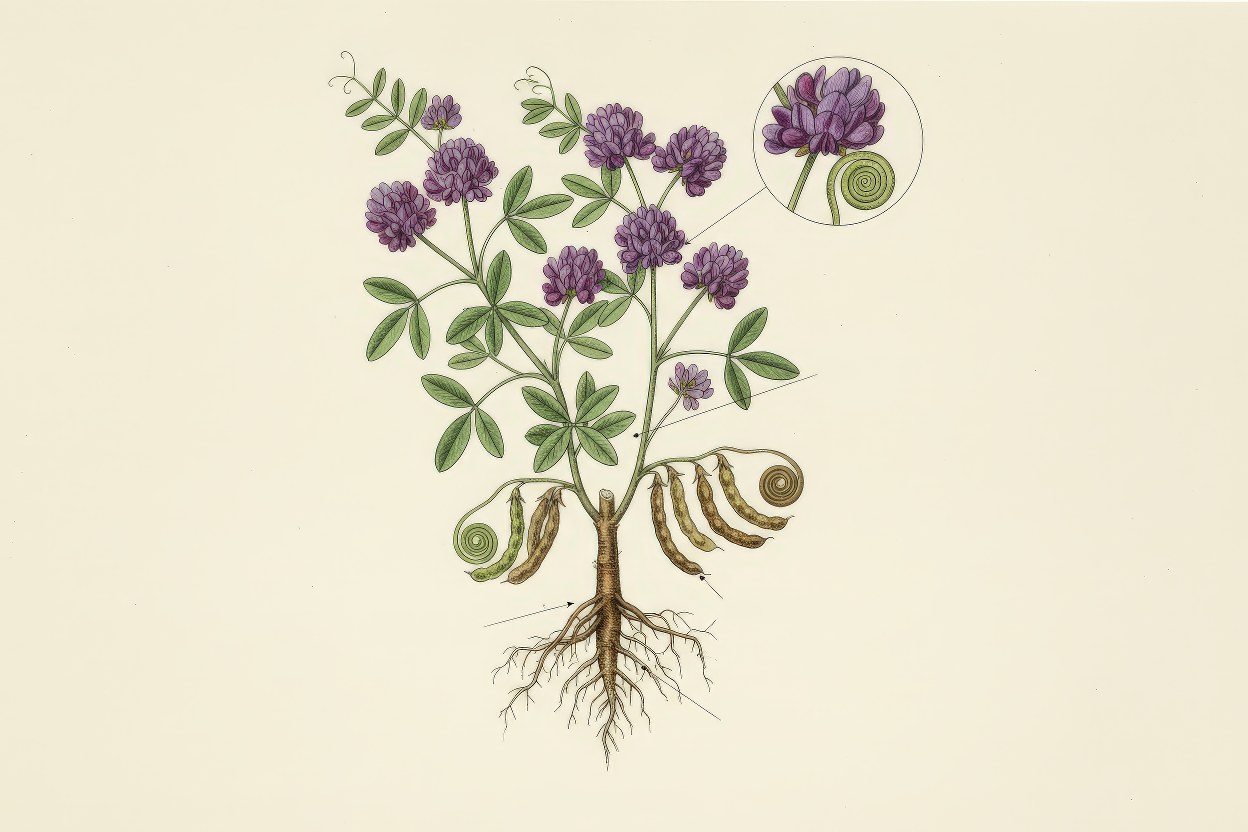
42. Medicago sativa (Alfalfa)
Phytoremediation: Deep root system (up to 4.5m) improves soil structure, excellent nitrogen fixer.
Nutrient Uptake: Fixes 100-300 kg nitrogen per hectare per year.
Growing Conditions: 0-2500m, requires well-drained soil.
Synergy: High-quality fodder crop, improves soil for rotation crops, drought-tolerant.
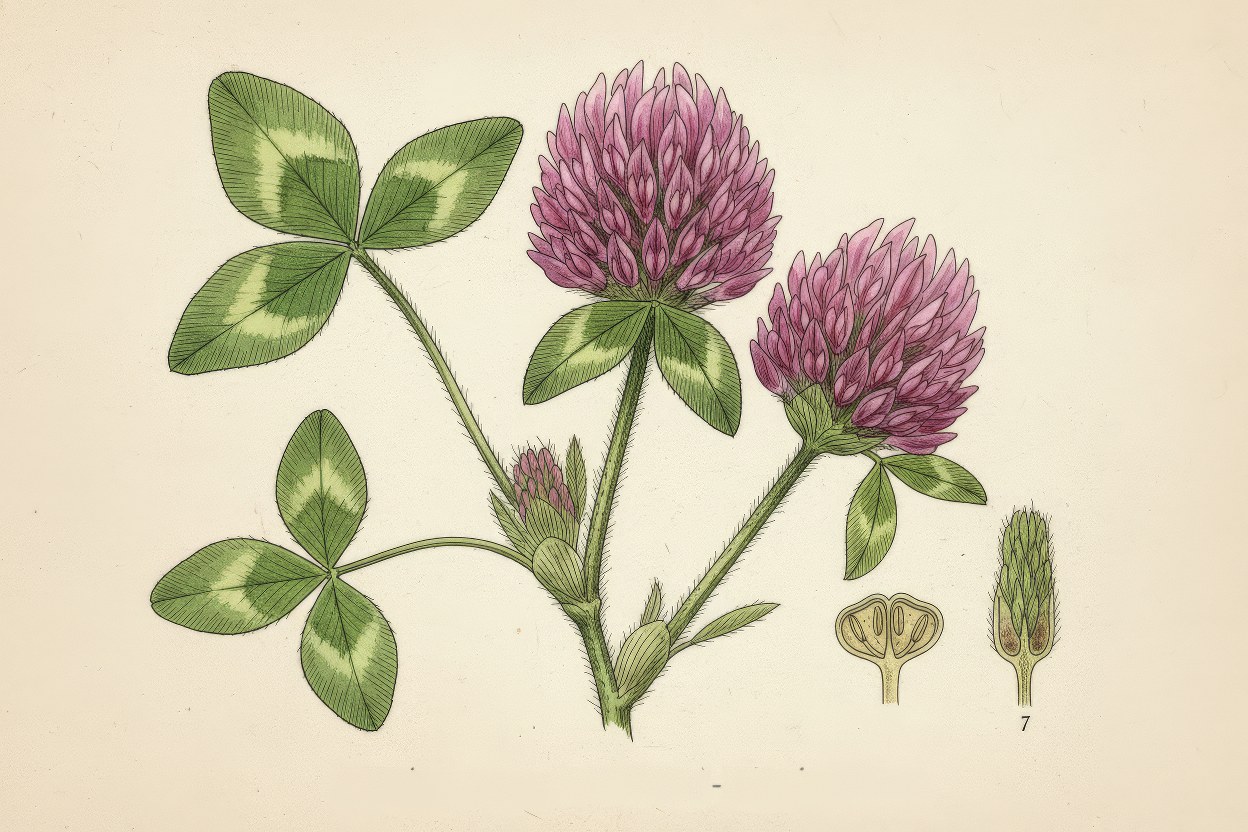
43. Trifolium pratense (Clover)
Phytoremediation: Nitrogen fixation, living ground cover prevents erosion.
Nutrient Uptake: Fixes 100-200 kg nitrogen per hectare per year.
Growing Conditions: 1000-3500m, cool temperate climates.
Synergy: Living mulch, pollinator food source (bees), cover crop for orchards.
VII. Grasses for Erosion Control
Category Overview: AquaSai employs strategic grass species with deep root systems to prevent soil erosion along the Bagmati River banks. These grasses create dense root networks that stabilize slopes and filter surface runoff.
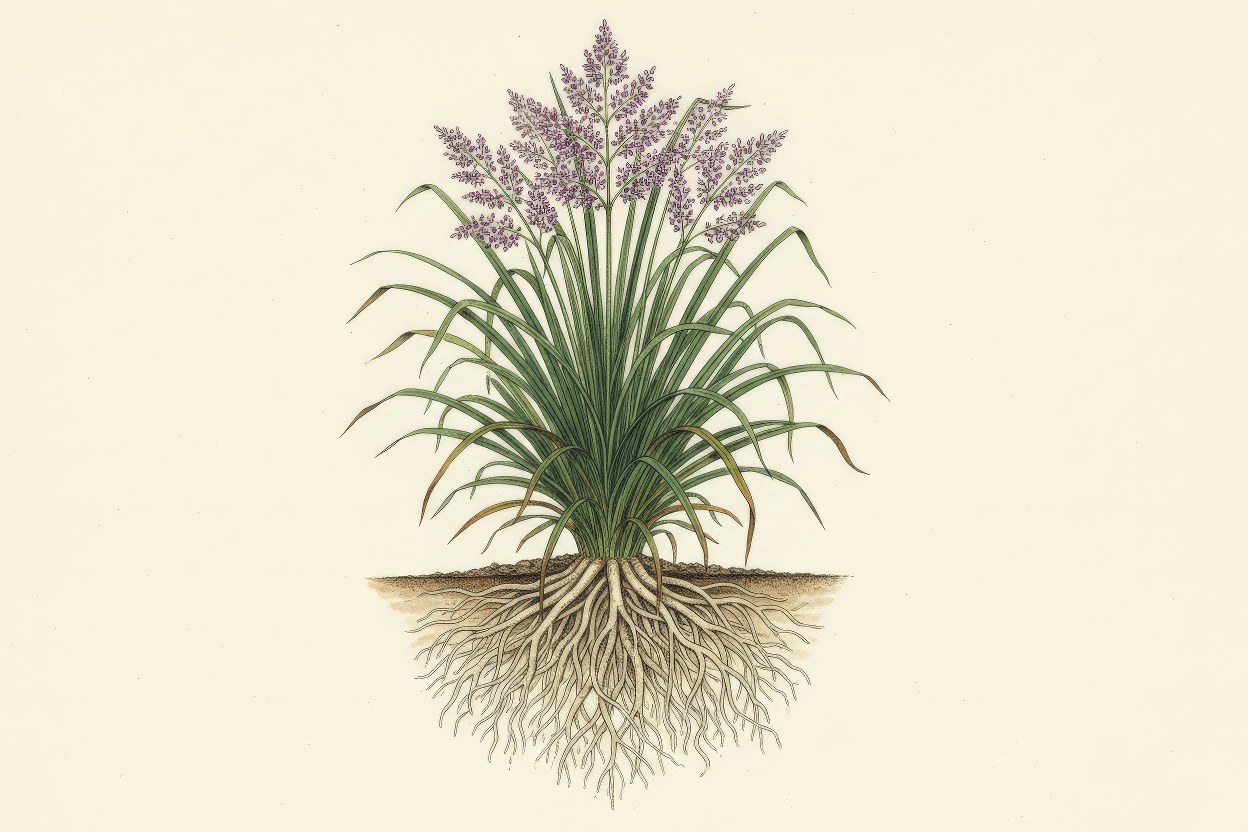
44. Vetiveria zizanioides (Vetiver)
Phytoremediation: Exceptional erosion control, heavy metal uptake, roots reach 3-4 meters deep.
Nutrient Uptake: Deep roots (3-4m), extremely high biomass production.
Growing Conditions: 0-2200m, slope stabilization champion.
Synergy: Erosion control champion (Vetiver System), aromatic oil production, living barrier.
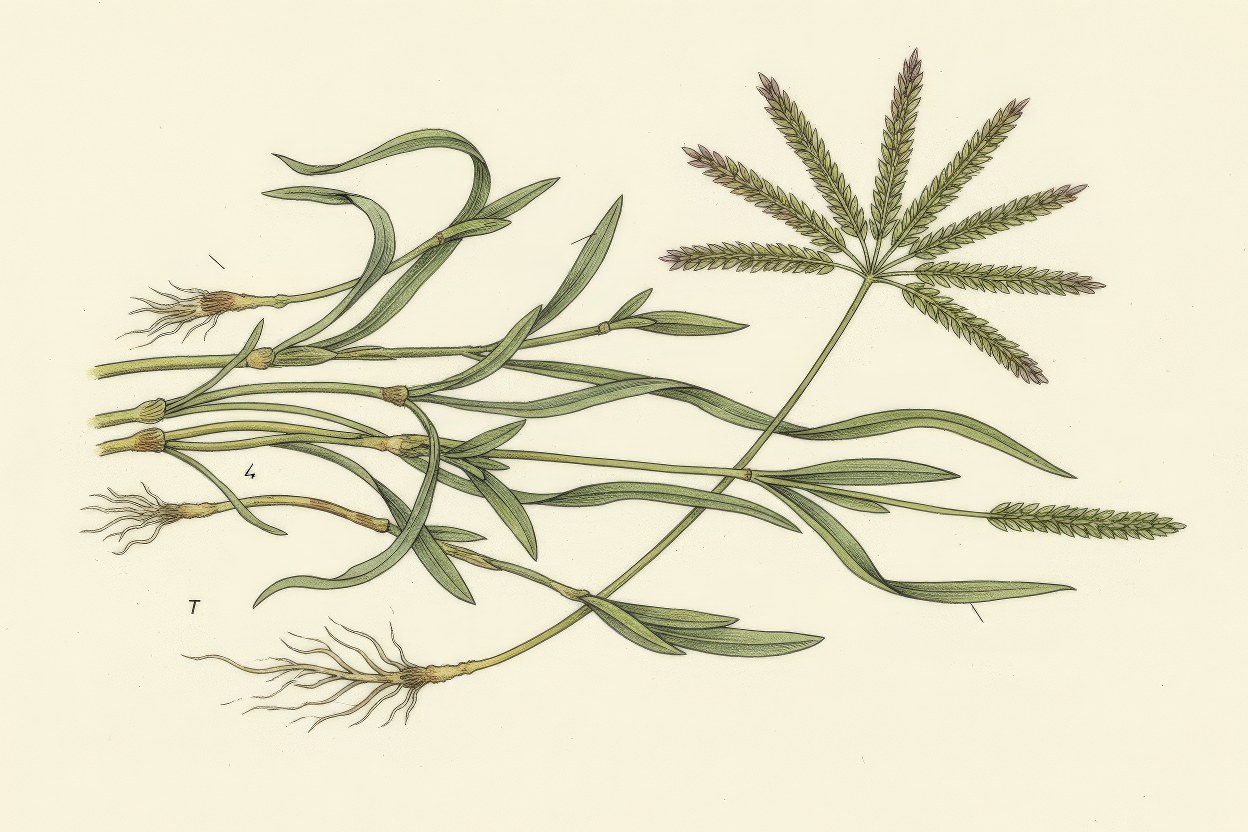
45. Cynodon dactylon (Dubo Grass)
Phytoremediation: Soil binding through stolons and rhizomes, salt tolerance.
Nutrient Uptake: Dense mat formation prevents soil erosion.
Growing Conditions: 0-2500m, extremely adaptable.
Synergy: Quick establishment, livestock fodder, sacred grass in Hindu rituals.
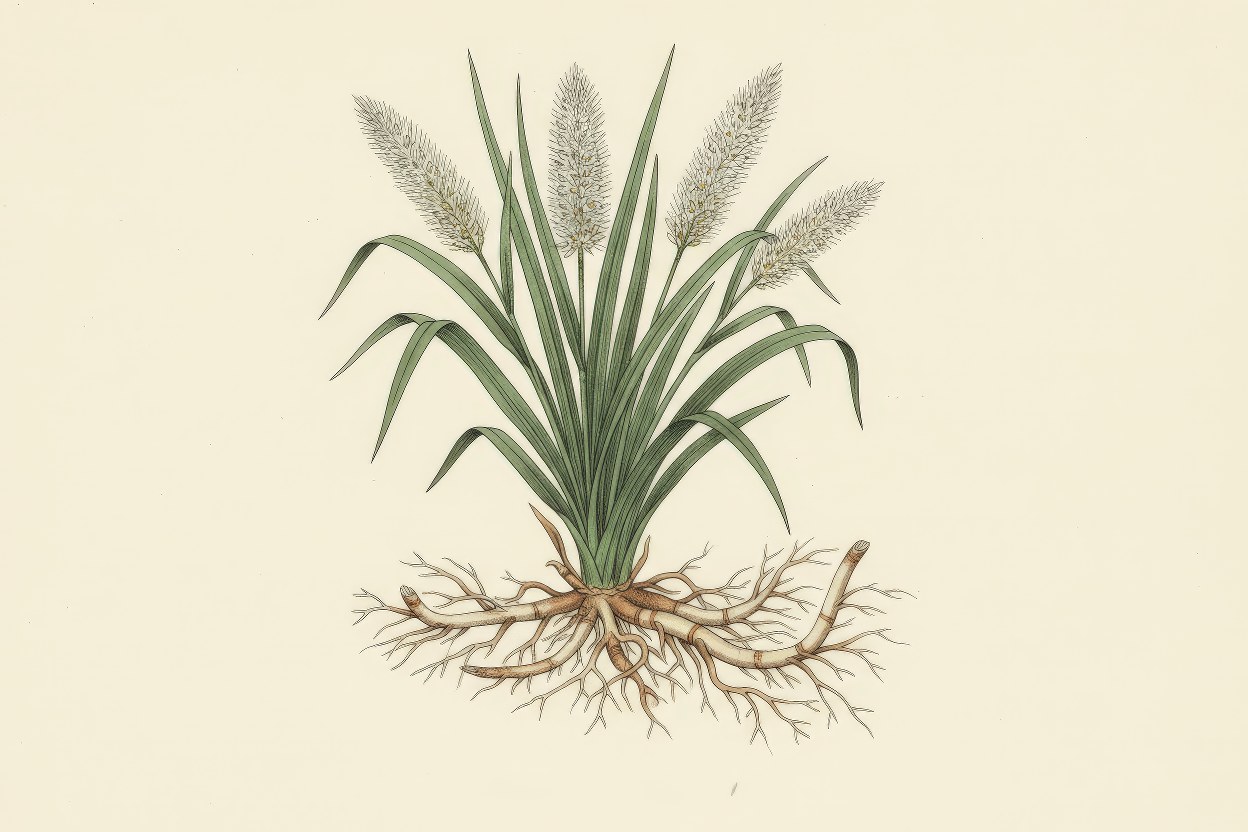
46. Imperata cylindrica (Cogon Grass / Siru)
Phytoremediation: Rapid colonizer of degraded land, erosion control.
Nutrient Uptake: Aggressive nutrient uptake, fast establishment.
Growing Conditions: 0-2000m, pioneer species.
Synergy: Quickly covers bare soil, thatching material.
Note: Manage carefully in AquaSai systems to prevent invasiveness, regular cutting recommended.
VIII. Bamboo Species
Category Overview: Bamboo is central to AquaSai's riverbank bioengineering approach. These fast-growing species provide rapid carbon sequestration, structural support for slopes, and economic benefits through sustainable harvesting.
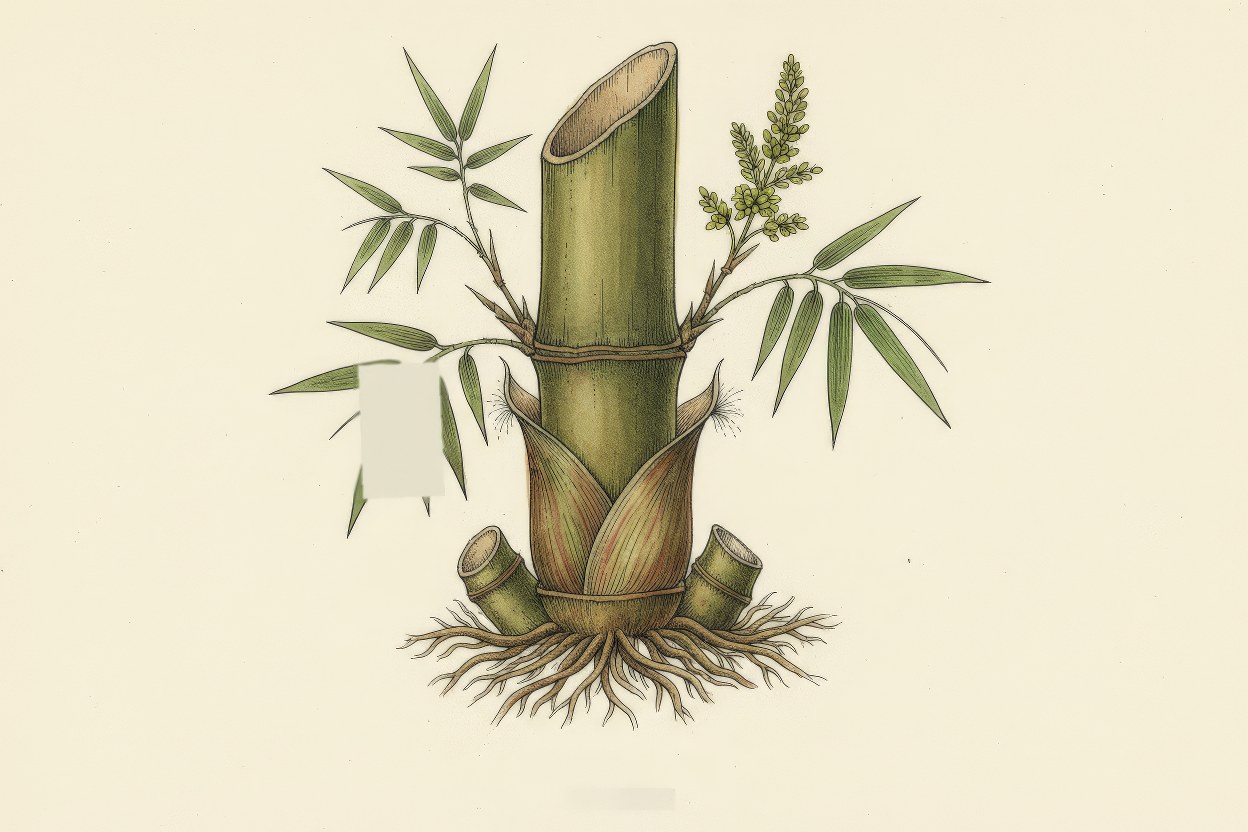
47. Bambusa balcooa (Tama Bans)
Phytoremediation: Rapid carbon sequestration (35% more than trees), riverbank stabilization.
Nutrient Uptake: High biomass production, efficient nutrient cycling.
Growing Conditions: 100-1500m, riparian zones, clumping type.
Synergy: Construction material (bioengineering structures), edible shoots, wildlife habitat, sustainable harvest.
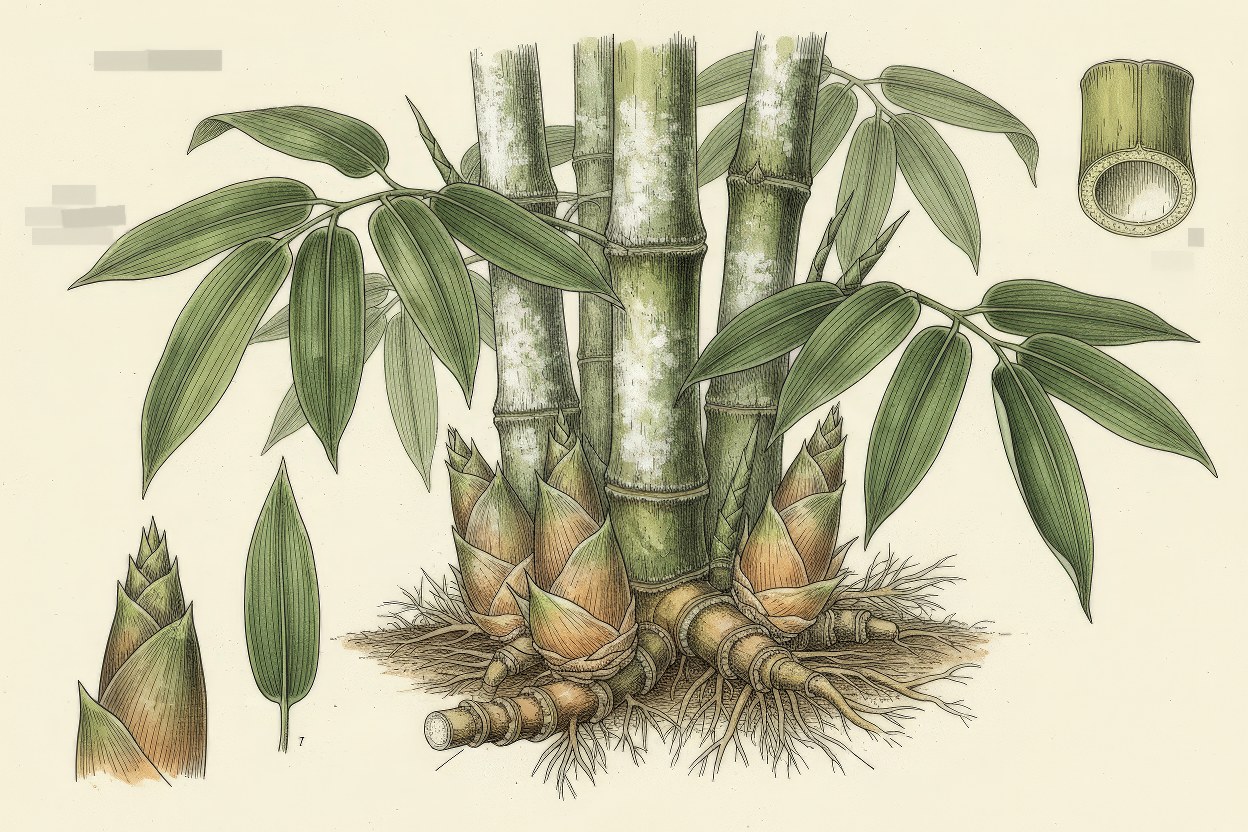
48. Dendrocalamus hamiltonii (Tama)
Phytoremediation: Bank stabilization, landslide prevention through extensive rhizome network.
Nutrient Uptake: Fast growing, nutrient efficient, large diameter culms.
Growing Conditions: 200-1800m, forms extensive groves.
Synergy: Economic value (construction, furniture), structural support for slopes, shoots edible.
Ecosystem Synergy & Harmonious Integration
AquaSai's Multi-Functional Ecosystem Design Philosophy: This comprehensive plant selection represents AquaSai's holistic approach to ecological restoration, where each species serves multiple functions. Plants are not chosen in isolation but as components of integrated, self-sustaining systems that address water pollution, provide medicinal resources, restore biodiversity, and support local livelihoods.
Multi-Layer Planting Strategy
- Canopy Layer (Trees): Betula utilis, Alnus nepalensis, Ficus religiosa, Populus ciliata, Terminalia chebula. Function: Carbon storage, shade provision, wildlife habitat, water cycle regulation, sacred/cultural significance.
- Mid-Story (Shrubs): Berberis asiatica, Zanthoxylum armatum, Cannabis sativa, Azadirachta indica. Function: Heavy metal accumulation, erosion control, economic/medicinal value, wildlife corridors.
- Herbaceous Layer: Urtica dioica, Artemisia vulgaris, Medicago sativa, Curcuma longa, Ocimum sanctum. Function: Ground cover, nitrogen fixation, food/medicine production, pollinator support.
- Aquatic Layer: Floating (Eichhornia, Pistia, Lemna, Azolla), Emergent (Typha, Phragmites, Cyperus, Acorus), Submerged (Hydrilla, Ceratophyllum, Potamogeton, Myriophyllum). Function: Water purification, heavy metal removal, oxygenation, nutrient sequestration.
- Grass Layer: Vetiveria zizanioides, Cynodon dactylon. Function: Deep soil stabilization, living barriers, erosion prevention on slopes.
Nutrient Cycling Synergies in AquaSai Systems
- Nitrogen Cycle Enhancement: Nitrogen fixers (Alnus nepalensis with Frankia, Azolla filiculoides with Anabaena, Medicago sativa, Trifolium pratense, Astragalus with Rhizobium) provide atmospheric nitrogen input, while high-uptake plants (Typha, Phragmites, Water Hyacinth) prevent eutrophication by removing excess nitrogen from water.
- Phosphorus Management: Aquatic plants (Eichhornia, Pistia) remove excess phosphorus from water column and sediments. Deep-rooted trees (Alfalfa, Ficus) bring up deep phosphorus reserves. Mycorrhizal plants (Bergenia, Dactylorhiza) improve phosphorus availability for other species.
- Heavy Metal Sequestration Chain: Hyperaccumulators (Cannabis sativa, Salix babylonica, Populus ciliata) extract metals from riparian soils. Aquatic hyperaccumulators (Eichhornia crassipes, Typha, Acorus) extract from water. Regular harvest and safe disposal prevent re-contamination. AquaSai protocols ensure proper biomass handling.
- Carbon Sequestration Network: Rapid bamboo growth, deep-rooted trees (Ficus, Terminalia), and high-biomass aquatic plants create multi-scale carbon capture from atmosphere and water.
Cultural and Economic Integration
AquaSai's approach recognizes that restoration must benefit local communities. Sacred plants (Ficus religiosa, Ocimum sanctum, Saussurea obvallata), medicinal harvests (Tinospora, Azadirachta, Curcuma), food sources (Urtica, bamboo shoots, Zanthoxylum), and economic products (Sapindus soap, Cannabis fiber, bamboo construction) create sustainable livelihoods while restoring ecosystems.
Priority Implementation Plan for AquaSai Bagmati Restoration
Phase 1: Immediate Action (Months 1-6) - Pioneer Species Establishment
- Erosion Control: Vetiveria zizanioides planted on critical slopes using contour lines
- Water Purification: Typha latifolia, Phragmites australis in constructed wetlands and riparian edges
- Soil Improvement: Alnus nepalensis for nitrogen fixation in degraded riparian zones
- Rapid Stabilization: Fast-growing willows (Salix babylonica) propagated from cuttings
- Community Engagement: Sacred Tulsi (Ocimum sanctum) at community nodes
Phase 2: Establishment (Years 1-3) - Diversity and Function
- Medicinal Herb Integration: Tinospora cordifolia, Azadirachta indica, Curcuma longa for community medicine gardens
- Bamboo Corridors: Bambusa balcooa, Dendrocalamus hamiltonii for bioengineering structures and sustainable harvest
- Aquatic Diversity: Add submerged (Hydrilla, Ceratophyllum) and floating species (Lemna, Azolla) to constructed wetlands
- Economic Trees: Sapindus mukorossi, Zanthoxylum armatum for sustainable income
- Pollinator Support: Flowering medicinal plants and clover ground covers
Phase 3: Maturation (Years 4-10) - Self-Sustaining Ecosystem
- Canopy Maturation: Ficus religiosa, Terminalia chebula, Populus ciliata reach productive size
- Medicinal Harvest Begins: Sustainable harvesting protocols for Curcuma, Tinospora, Berberis
- Complete Ecosystem Integration: All layers (canopy, mid-story, herbaceous, aquatic, grass) functioning synergistically
- Sacred/Cultural Features: Pipal-Banyan groves, Tulsi gardens, Brahma Kamal conservation zones
- Wildlife Return: Restored habitat supports birds, fish, amphibians, pollinators
- Water Quality Monitoring: Measurable reduction in heavy metals, nitrogen, phosphorus; increased dissolved oxygen
Success Metrics for AquaSai Bagmati Project
- Water quality: 70-80% reduction in nitrogen/phosphorus, 60-90% heavy metal removal
- Biodiversity: 300% increase in plant species, return of indicator species (aquatic insects, fish, birds)
- Soil stability: 90% reduction in erosion rates on treated slopes
- Community benefit: 50+ households engaged in sustainable medicinal plant harvesting
- Carbon sequestration: 100+ tons CO2 equivalent per hectare over 10 years
- Cultural revival: Sacred groves established, traditional knowledge transmitted
About AquaSai: Ecological Water Engineering for Sustainable River Restoration
AquaSai is a leading innovator in ecological water engineering, specializing in phytoremediation, constructed wetlands, and nature-based solutions for water purification and river ecosystem restoration. We integrate traditional medicinal plant knowledge from Ayurveda, Tibetan Medicine, and Traditional Chinese Medicine with modern bioengineering techniques to create sustainable, multi-functional restoration systems.
What AquaSai Does:
- Phytoremediation Systems Design: Using plants to remove heavy metals, excess nutrients, and organic pollutants from contaminated water and soil
- Constructed Wetland Engineering: Multi-Soil-Layering Reactors (MSR) and advanced wetland systems for wastewater treatment
- River Restoration Projects: Comprehensive ecosystem restoration combining ecological engineering with community engagement (e.g., Bagmati River Kathmandu, Koh Phangan Thailand)
- Medicinal Plant Integration: Incorporating economically valuable medicinal plants with phytoremediation capacity for sustainable livelihoods
- Software Tools: AquaSai MSR Tool and HYDRUS-CW2D Simulator for wetland design
- Training & Capacity Building: MSR Master PRO certification programs
The AquaSai Approach: Our Bagmati Restoration Initiative demonstrates how strategic plant selection can simultaneously address water pollution, provide medicinal resources, restore biodiversity, and engage local communities. This plant list represents years of research combining phytoremediation science, traditional medicine, and Himalayan ecology.
Contact AquaSai: aquasai@uxrzone.com | https://aquasai.uxrzone.com