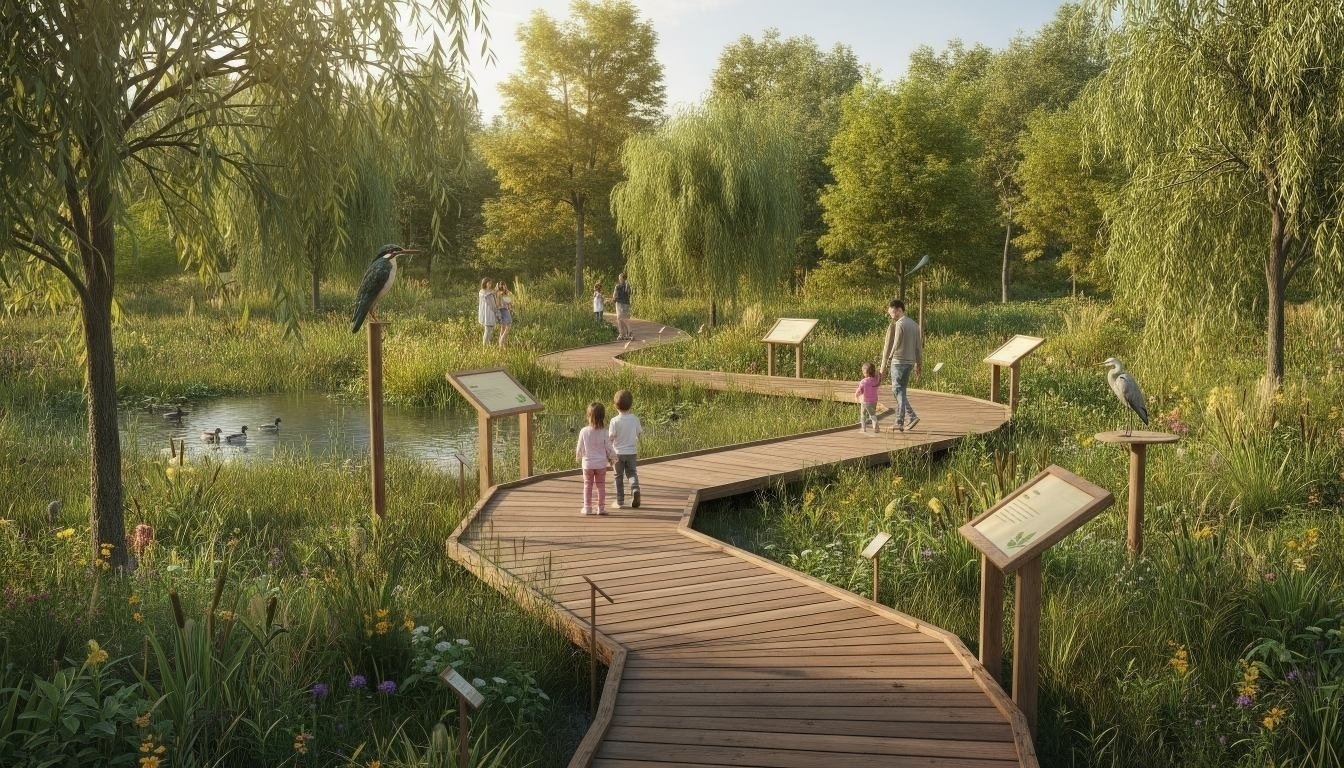
Kathmandu Valley Location Analysis

Comprehensive Site Assessment for AquaSai MSR Deployment on Bagmati River

Location Overview: Kathmandu Valley

Strategic Location Context

The Kathmandu Valley is an oval-shaped basin in central Nepal, home to over 3 million people. The Bagmati River, Nepal's sacred lifeline, flows through the heart of this valley, making it an ideal location for AquaSai's pioneering MSR technology deployment.

3M+ Valley Population
51 km Bagmati River Length
1,300m Avg. Elevation
5 Major Urban Centers

Critical Problem

Severe Pollution Crisis: BOD levels exceed 120 mg/L (vs. 6 mg/L standard), near-zero dissolved oxygen, and heavy contamination with fecal coliform, heavy metals, and excess nutrients.

  • Untreated sewage from 3M+ residents
  • Industrial effluent discharge
  • Solid waste dumping
  • Agricultural runoff

Strategic Opportunity

High-Impact Demonstration: Kathmandu Valley offers the perfect setting to showcase AquaSai MSR technology in a highly visible, culturally significant, and urgently needed restoration project.

  • National & international visibility
  • Cultural & religious significance
  • Government commitment to restoration
  • Multiple funding opportunities

AquaSai Solution

Nature-Based Treatment: Multi-Stage Recirculating (MSR) constructed wetland system designed to treat 100,000 L/day in pilot phase with 99% pollutant removal efficiency.

  • Phytoremediation with native plants
  • 70% lower cost than conventional
  • Zero chemical use
  • Biogas & nutrient recovery

Kathmandu Valley Geographic Context

The valley is surrounded by hills ranging from 1,500m to 2,800m elevation, creating a natural bowl that concentrates both population and pollution. The Bagmati River originates from the Shivapuri hills and flows south through Kathmandu and Lalitpur before exiting the valley at Chobar Gorge.
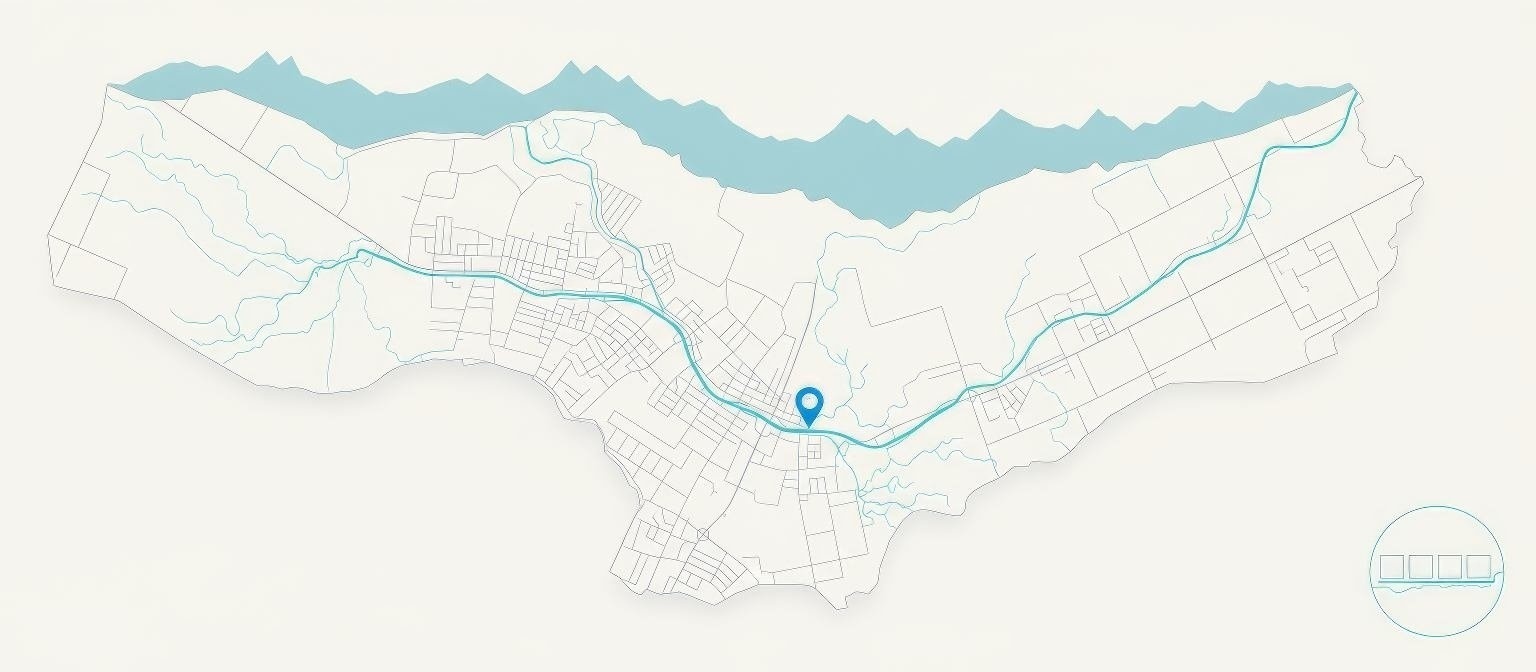
Kathmandu Valley Map

Geographic & Climatic Analysis

Geographic Parameter Value/Description Implication for MSR
Latitude/Longitude 27.7°N, 85.3°E Subtropical highland climate - ideal for year-round wetland operation
Elevation 1,300 - 1,500m ASL Moderate elevation provides good temperature range for plant growth
Valley Area 665 km² Large area for multiple MSR installations and scaling
Average Temperature 10-30°C (year-round) Optimal range for wetland biological processes
Annual Rainfall 1,400mm (monsoon-dominated) Adequate water supply; monsoon management critical
Monsoon Season June - September (80% of rainfall) Design for high flow management and overflow systems
Dry Season October - May Optimal construction period; low flow treatment priority
Soil Type Alluvial clay, silt, sand deposits Suitable for constructed wetland with proper liner systems
Seismic Zone High (Zone V) Earthquake-resistant design essential for infrastructure
Water Table Depth 2-10m (seasonal variation) Groundwater protection & monitoring critical

Solar Potential

5.5 kWh/m²/day average solar radiation

Excellent for solar-powered pumps and UV disinfection systems. Nepal's high altitude provides strong UV intensity for natural pathogen reduction.

Wind Patterns

Valley winds: Upslope during day, downslope at night

Natural aeration benefit for wetland systems. Minimal odor transport concern with proper design.

Hydrological Regime

Bagmati flow: 5-50 m³/s (seasonal variation)

High variability requires flexible intake design and storage capacity for consistent treatment.
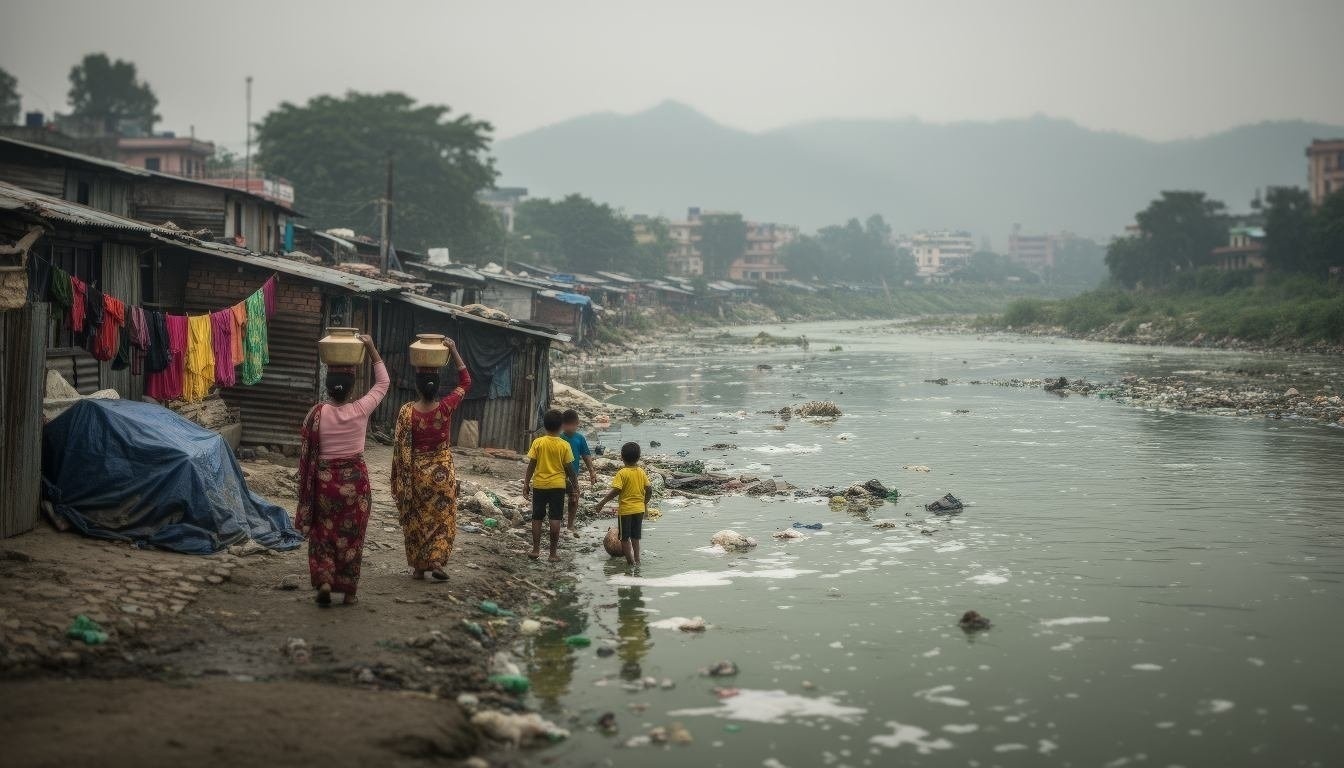
Environmental Conditions & Water Quality

Current Water Quality Crisis

The Bagmati River in Kathmandu Valley is classified as Class V (worst quality) with extreme pollution requiring urgent intervention.

Parameter Current Level Standard MSR Target Removal %
BOD (mg/L) 120+ 6 10-15 88-92%
COD (mg/L) 200+ 30 40-50 75-80%
DO (mg/L) 0-1 5-6 4-6 5-6x increase
TSS (mg/L) 150-300 50 30-40 80-87%
TN (mg/L) 40-80 10 8-12 80-85%
TP (mg/L) 5-15 0.5 1-2 80-90%
Fecal Coliform (MPN/100mL) 10⁶-10⁷ 1,000 10³-10⁴ 99%+
Heavy Metals (Pb, Cd, Cr) Above limits Varies Within limits 60-90%

Pollution Sources

  • Domestic sewage: 3M people, only 50% connected to sewers, minimal treatment
  • Industrial: 200+ small-scale industries discharge untreated effluent
  • Agricultural: Fertilizer and pesticide runoff from valley farms
  • Solid waste: Open dumping along riverbanks
  • Hospital waste: Untreated medical waste discharge

Ecosystem Impact

  • Aquatic life: Complete loss of fish and invertebrate species
  • Biodiversity: Riparian vegetation severely degraded
  • Water fowl: Migratory bird habitat destroyed
  • Cultural sites: Bathing ghats unusable
  • Downstream: Contamination affects 30+ downstream villages

Public Health

  • Waterborne diseases: Cholera, typhoid, dysentery outbreaks
  • Heavy metal exposure: Chronic health impacts on farmers
  • Food contamination: Vegetables irrigated with polluted water
  • Economic cost: $50M+ annual health burden
  • Vulnerable groups: Women, children, informal settlements most affected

Native Flora for Phytoremediation

AquaSai has identified 48 native Nepali plant species suitable for MSR deployment in Kathmandu Valley climate, including:

Aquatic Plants:
  • Typha latifolia (Cattail)
  • Phragmites australis (Common Reed)
  • Acorus calamus (Sweet Flag)
  • Eichhornia crassipes (Water Hyacinth)
Medicinal Plants:
  • Tinospora cordifolia (Guduchi)
  • Azadirachta indica (Neem)
  • Curcuma longa (Turmeric)
  • Ocimum sanctum (Tulsi)
Riparian Trees:
  • Ficus religiosa (Pipal)
  • Salix babylonica (Willow)
  • Alnus nepalensis (Alder)
  • Populus ciliata (Poplar)

Technical Specifications for MSR Deployment

Pilot System Dimensions

Total Footprint: 2,000 m²
Treatment Capacity: 100,000 L/day
Wetland Cells: 4 stages
Depth: 0.6-1.2m
Retention Time: 5-7 days
Recirculation Rate: 3-5x

Multi-Stage Process

  1. Stage 1: Settling & Screening (remove solids, debris)
  2. Stage 2: Anaerobic Treatment (BOD reduction, biogas production)
  3. Stage 3: Aerobic Wetland (nitrification, oxygenation)
  4. Stage 4: Polishing Pond (pathogen removal, final filtration)

Each stage optimized for specific pollutant removal mechanisms

Infrastructure Requirements

  • Intake structure with screens (3 sizes)
  • Solar-powered pumps (2 kW total)
  • HDPE liner for wetland cells
  • Gravel & sand filter media (200 m³)
  • Piping system (PVC, 4-8" diameter)
  • Anaerobic digester (20 m³)
  • Biogas storage (10 m³)
  • Monitoring equipment (sensors, meters)
Component Specification Quantity Cost (USD)
Civil Works Excavation, terracing, concrete structures 2,000 m² $85,000
Liner System HDPE 1.5mm, geotextile underlay 2,500 m² $15,000
Filter Media Graded gravel (20-80mm), sand (2-5mm) 200 m³ $8,000
Pumps & Piping Solar pumps, PVC pipes, valves Complete system $25,000
Anaerobic Digester Fixed dome, 20m³ capacity 1 unit $15,000
Plant Materials Native phytoremediation species 10,000 plants $10,000
Monitoring Equipment DO, pH, turbidity, flow meters 1 set $12,000
Labor & Training Skilled & unskilled labor, workshops 12 months $30,000
TOTAL CAPEX $200,000

Energy Requirements

Minimal energy footprint: MSR system requires only 2 kW for recirculation pumps, easily provided by solar panels. Annual energy cost: $200 (vs. $5,000+ for conventional treatment).

Energy production: Biogas from anaerobic digester produces 50 m³/day, equivalent to 1,000 kWh/month - net positive energy balance.

Priority Deployment Sites

Site Selection Criteria

AquaSai has conducted comprehensive site analysis across Kathmandu Valley, evaluating locations based on:

  • Water quality: Pollution severity and treatment urgency
  • Land availability: 2,000+ m² contiguous area
  • Accessibility: Road access, proximity to communities
  • Visibility: High-profile demonstration value
  • Land tenure: Public land or willing private landowner
  • Community support: Local stakeholder engagement
  • Scalability: Potential for expansion and replication

Recommended Pilot Site

Guhyeshwari Temple Area is recommended for initial pilot deployment due to:

  • Maximum cultural and religious significance
  • High visibility to domestic and international visitors
  • Strong government and religious institution support
  • Urgent need to restore sacred bathing ghats
  • Available land with willing landowner (Trust)
  • Excellent demonstration and scaling potential

Scaling Strategy

Phase 1: Single pilot site (Year 1)
Phase 2: 3 additional sites (Years 2-3)
Phase 3: 10+ sites valley-wide (Years 4-5)

Target: Treat 20% of Bagmati River flow by Year 5

Priority Site Locations Map

Priority sites map

Stakeholder Mapping & Engagement

Government Agencies

  • High Powered Committee for Integrated Development of Bagmati Civilization (HPCIDBC) - Primary government body for Bagmati restoration
  • Ministry of Water Supply - Policy and funding authority
  • Kathmandu Upatyaka Khanepani Limited (KUKL) - Water utility operator
  • Department of Environment - Environmental clearances
  • Bagmati Civilization Integrated Development Committee - Cultural heritage protection

Municipal Bodies

  • Kathmandu Metropolitan City - Land allocation, permits
  • Lalitpur Metropolitan City - Southern valley jurisdiction
  • Bhaktapur Municipality - Eastern valley sites
  • Kirtipur Municipality - Western valley tributaries

Development Partners

  • Asian Development Bank (ADB) - Major WASH funding
  • World Bank - Urban development projects
  • UNDP Nepal - SDG implementation
  • GIZ Nepal - Technical cooperation
  • JICA - Infrastructure support

Religious Institutions

  • Pashupati Area Development Trust (PADT) - Temple complex management
  • Guhyeshwari Temple Committee - Sacred site custodians
  • Local monasteries and ashrams - Spiritual community leaders

Academic & Research

  • Tribhuvan University - Institute of Engineering, Central Department of Environmental Science
  • Kathmandu University - Center for Water and Sanitation Studies
  • Nepal Academy of Science and Technology (NAST) - Research collaboration
  • International Centre for Integrated Mountain Development (ICIMOD) - Mountain ecosystem expertise

NGOs & Civil Society

  • Nepal River Conservation Trust - River advocacy
  • Clean Up Nepal - Waste management
  • Women for Human Rights (WHR) - Women empowerment
  • Local Tole Sudhar Samiti (Neighborhood improvement committees) - Community mobilization

Stakeholder Engagement Timeline

Month 1-2: Initial Outreach

Present concept to HPCIDBC, Ministry of Water Supply, and KUKL. Secure letter of support and land identification assistance.

Month 3-4: Site Selection & Approvals

Engage municipal bodies for land allocation. Conduct community consultations. Submit environmental clearance applications.

Month 5-6: Partnership Development

Formalize MOUs with government partners. Engage ADB/World Bank for co-financing. Sign academic collaboration agreements.

Month 7-12: Implementation & Communication

Regular stakeholder briefings. Community training programs. Media engagement. Progress reporting to all partners.

Economic Analysis & Business Model

$200K Pilot CAPEX
$35K/yr Operating Cost
$50K/yr Revenue Potential
5 years Payback Period

Revenue Streams

Treated Water Sales $20,000/yr
To farmers (irrigation) $0.05/m³
To industries (cooling) $0.10/m³
Biogas Sales $15,000/yr
To local households $1/m³
Medicinal Plant Harvest $8,000/yr
Ayurvedic herbs Various
Carbon Credits $5,000/yr
VCS/Gold Standard $10/ton CO₂e
Training & Consulting $2,000/yr
TOTAL ANNUAL REVENUE: $50,000

Operating Expenses

Personnel $18,000/yr
1 Manager, 2 Technicians
Plant Maintenance $5,000/yr
Replanting, pruning, harvest
Equipment & Repairs $6,000/yr
Pumps, sensors, tools
Energy $200/yr
Solar panels maintenance
Monitoring & Testing $4,000/yr
Water quality lab tests
Administration $1,800/yr
TOTAL ANNUAL OPEX: $35,000

Social Enterprise Model

AquaSai MSR deployment operates as a hybrid social enterprise with multiple value propositions:

  • Environmental: Clean water, ecosystem restoration, carbon sequestration
  • Economic: Green jobs, agricultural productivity, resource recovery
  • Social: Public health, women empowerment, community resilience
  • Cultural: Sacred site restoration, traditional knowledge preservation

Financial sustainability achieved through diversified revenue streams and low operating costs, with $15K annual surplus for system expansion and community development programs.

Cost Comparison AquaSai MSR Conventional WWTP Savings
CAPEX (per 100,000 L/day) $200,000 $650,000 69%
Annual OPEX $35,000 $120,000 71%
Energy Cost $200/yr $5,000/yr 96%
Chemical Cost $0 $15,000/yr 100%
Skilled Labor Required Low High 60% less
Land Footprint 2,000 m² 800 m² Creates green space
Co-Benefits Multiple None Ecosystem value

Implementation Roadmap

Phase 1: Planning & Design (Months 1-3)

  • Detailed site assessment and topographic survey
  • Water quality baseline monitoring (12 parameters)
  • Engineering design and hydraulic modeling
  • Environmental Impact Assessment (EIA)
  • Community consultation and consent
  • Permit applications and approvals
  • Procurement planning and tendering

Phase 2: Construction (Months 4-9)

  • Site preparation and excavation
  • Intake structure and screening installation
  • Liner placement and cell construction
  • Filter media placement (gravel, sand)
  • Piping and pump system installation
  • Anaerobic digester construction
  • Solar panel array installation
  • Monitoring equipment setup

Phase 3: Planting & Commissioning (Months 10-12)

  • Native plant procurement (10,000 plants)
  • Strategic planting in wetland cells
  • System testing and calibration
  • Water quality testing protocol
  • Staff training (3 operators)
  • Community training workshops (50 participants)
  • Official inauguration ceremony

Phase 4: Operation & Optimization (Months 13-21)

  • Full system operation (100,000 L/day)
  • Weekly water quality monitoring
  • Plant growth monitoring and maintenance
  • Biogas production and distribution
  • Treated water delivery to farmers
  • System optimization adjustments
  • Monthly performance reporting

Phase 5: M&E and Scaling (Months 22-24)

  • Comprehensive impact assessment
  • Economic model validation
  • Stakeholder feedback collection
  • Replication blueprint development
  • Funding proposals for 5 additional sites
  • Regional outreach and knowledge sharing
  • Final project documentation and handover

Risk Assessment

  • Land tenure: Delays in land allocation → Mitigation: Early stakeholder engagement, multiple site options
  • Monsoon flooding: System damage during heavy rains → Mitigation: Overflow channels, flood-resistant design
  • Plant establishment: Initial plant mortality → Mitigation: 20% extra plants, native species selection, expert oversight
  • Community resistance: Local opposition to project → Mitigation: Extensive consultation, co-design, benefit sharing
  • Political changes: Government transitions affect support → Mitigation: Multi-stakeholder partnerships, cross-party buy-in

Success Metrics

Water Quality 80-90% pollutant removal
Treatment Volume 100,000 L/day sustained
System Uptime 95%+ operational days
Community Benefit 50+ households served
Jobs Created 10 direct, 30 indirect
Land Irrigated 5 hectares productive
Biogas Production 50 m³/day average
Stakeholder Satisfaction 80%+ positive feedback

Monitoring Plan

Water Quality Testing (Weekly):

  • BOD, COD, DO, pH, TSS, TN, TP
  • Fecal coliform, heavy metals (monthly)
  • Inlet vs. outlet comparison

Operational Monitoring (Daily):

  • Flow rates and recirculation cycles
  • Pump performance and energy use
  • Visual inspection of plant health
  • Biogas production volume

Impact Monitoring (Quarterly):

  • Household surveys (water use, health)
  • Agricultural productivity assessment
  • Economic benefit calculation
  • Biodiversity surveys (birds, insects)

Construction Considerations

  • Seismic design: All structures must meet Nepal seismic code (NBC 105) for Zone V
  • Monsoon timing: Major excavation and construction in dry season (Oct-May) only
  • Local materials: Prioritize locally sourced materials (gravel, sand, bamboo) for cost savings and community benefit
  • Labor: Hire from local communities with gender equity (minimum 40% women)
  • Safety: Full PPE and safety training for all workers; regular safety audits

Knowledge Sharing & Replication

AquaSai is committed to open-source knowledge sharing to maximize impact across Nepal and globally:

  • Documentation: Comprehensive design manual, construction guide, and O&M protocols (English & Nepali)
  • Training: MSR Master PRO certification program for engineers and technicians
  • Tools: Free access to AquaSai MSR Tool and HYDRUS-CW2D Simulator
  • Site visits: Open demonstration site for study tours and learning exchanges
  • Publications: Peer-reviewed papers and case studies for global dissemination